Year:
Fall 2024
Duration:
2 Months
Project Members:
Shreya Deep, Ruibin Zheng, Yabing Yang
Research and Discovery
Graduate students with ADHD face unique challenges in the academic space with time-blindness and task management. This can lead to late work, forgetting assignments, and overall lack of confidence in students.
Our preliminary research focused on reading scientific articles on body-doubling and ADHD.
We conducted two user interviews with graduate students at UMD with ADHD. They discussed struggles with task and time management, and how it negatively impacted their academic performance and mental health. From these interviews, we were able to pinpoint specific challenges within the current design space.
Our Solution
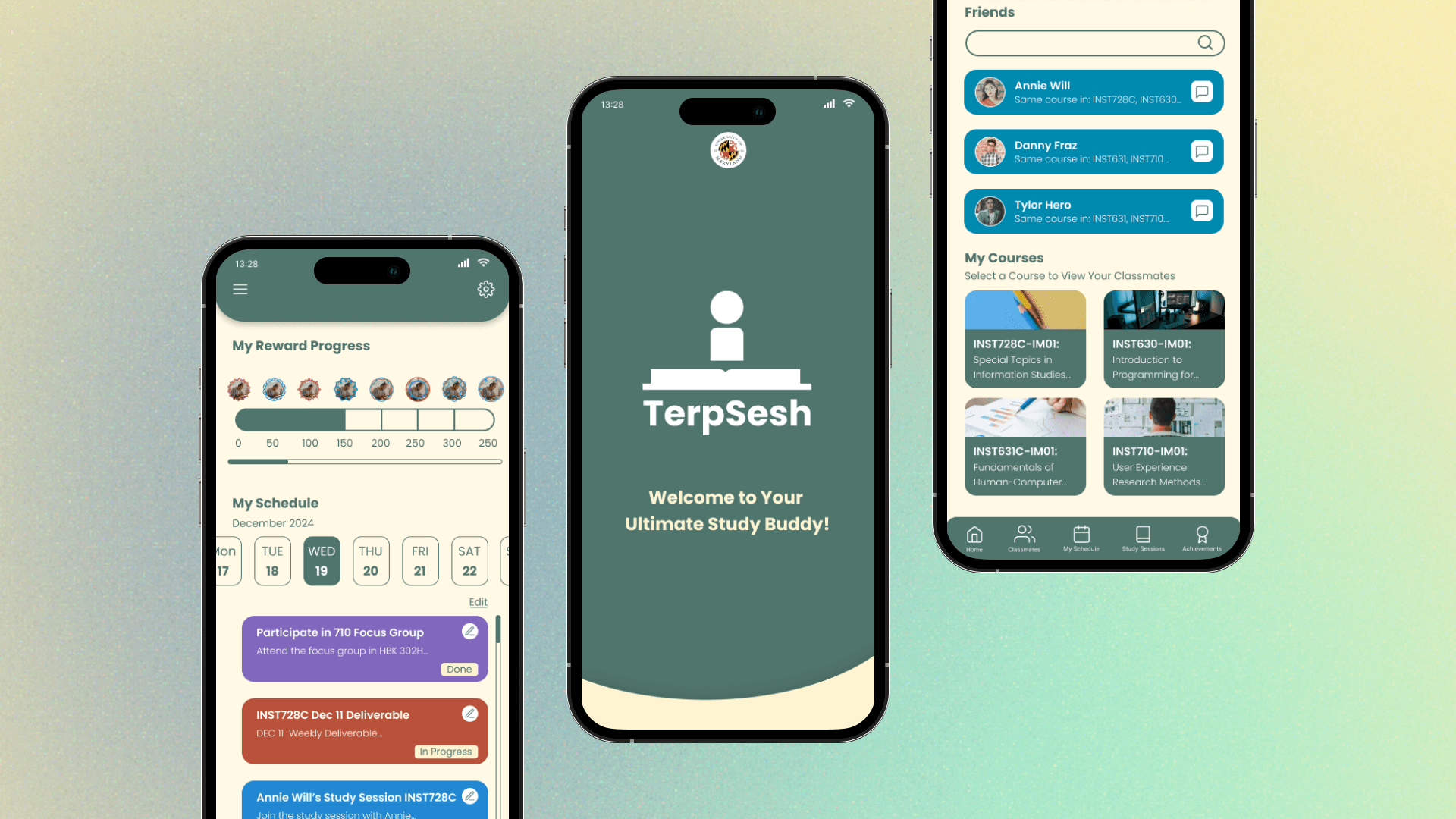
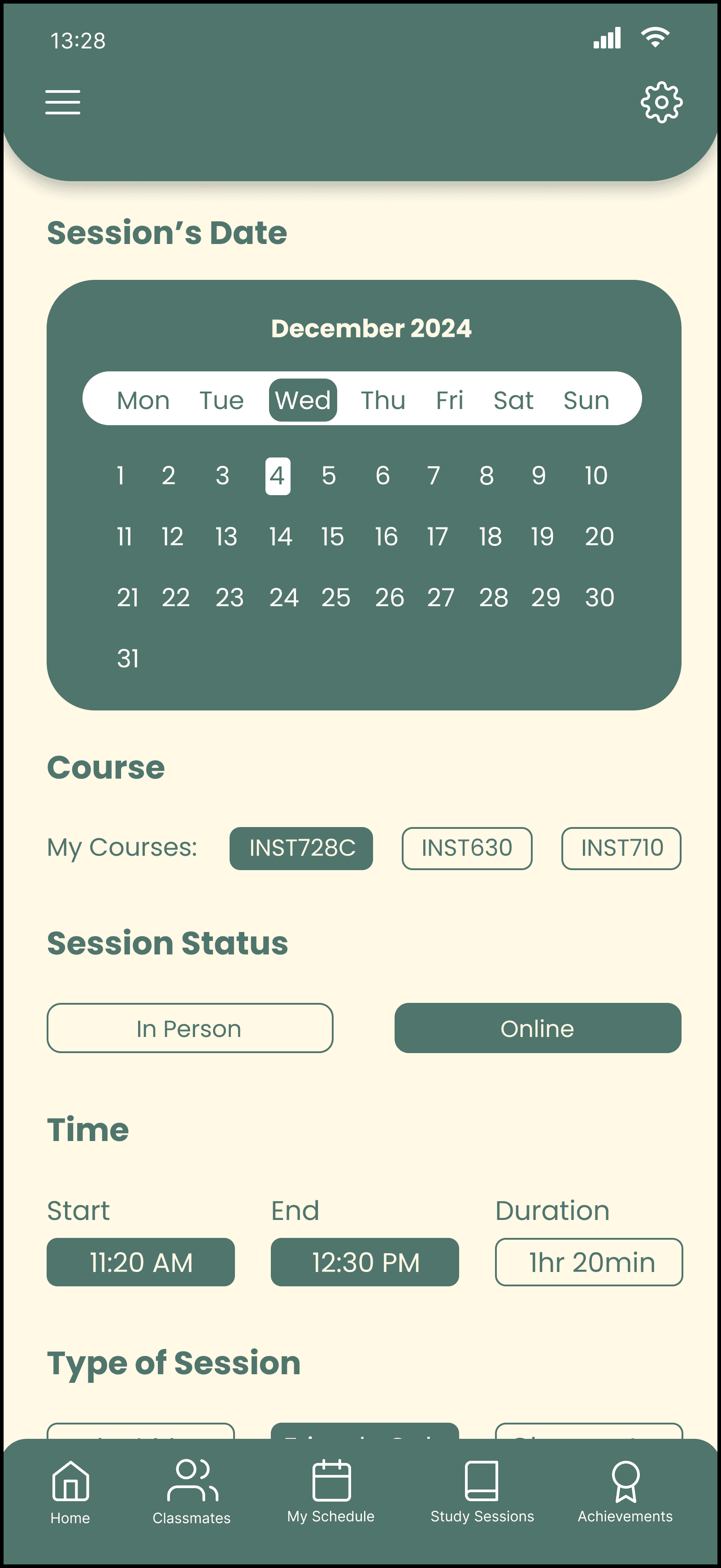
TerpSesh enables students to use body-doubling through study sessions with their peers. Body doubling, in which the student will work on tasks in the presence of others, will improve focus and motivation, and is an effective way for individuals with ADHD to boost their productivity. By connecting classmates together, students will be able to find or create study sessions tailored to their specific assignments, projects, or class in general.
Integrating the SSO authorization for UMD allows students to find the sessions created for their classes, and makes it easier for students to connect without having contact information.
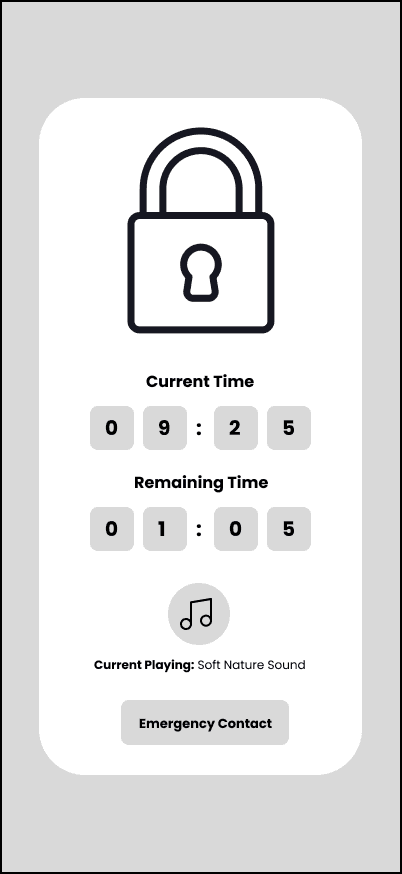
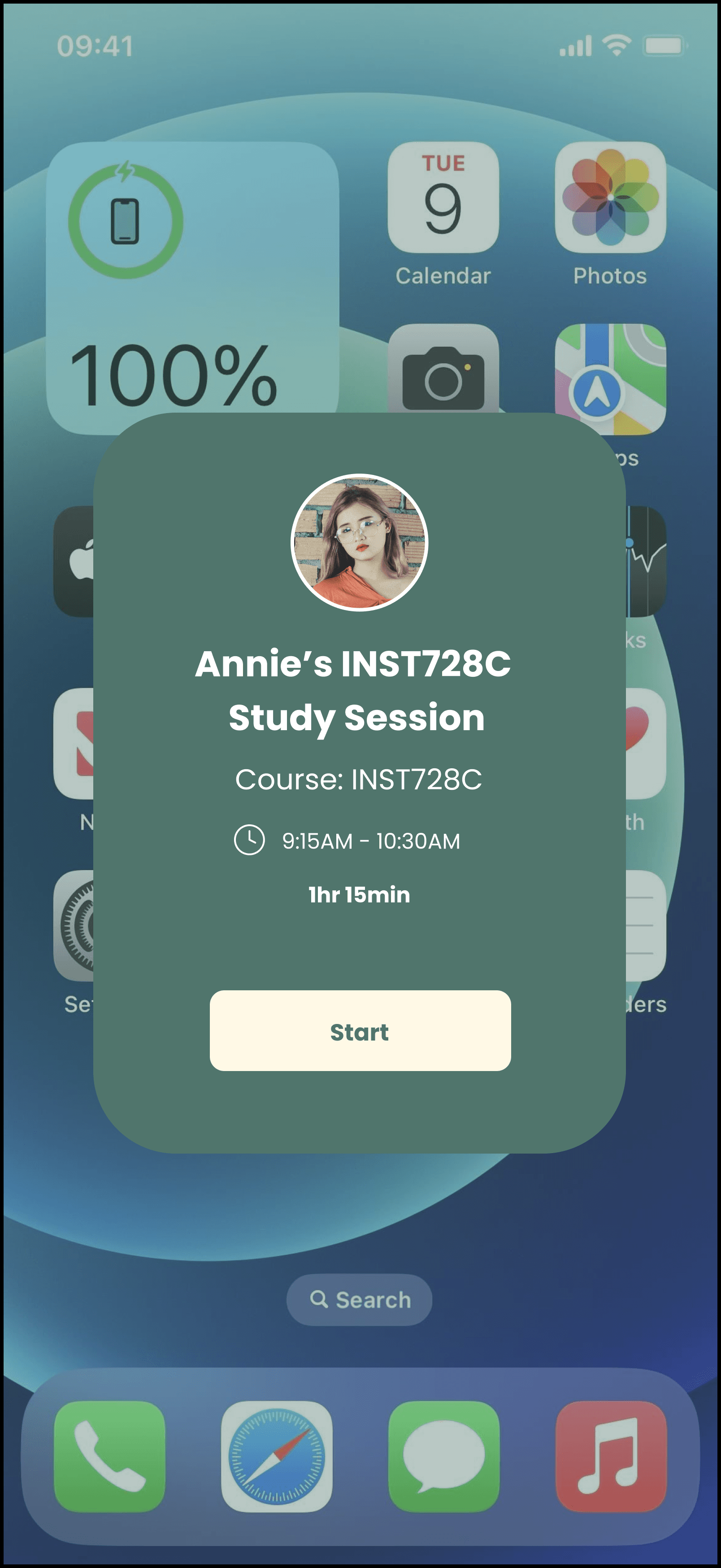
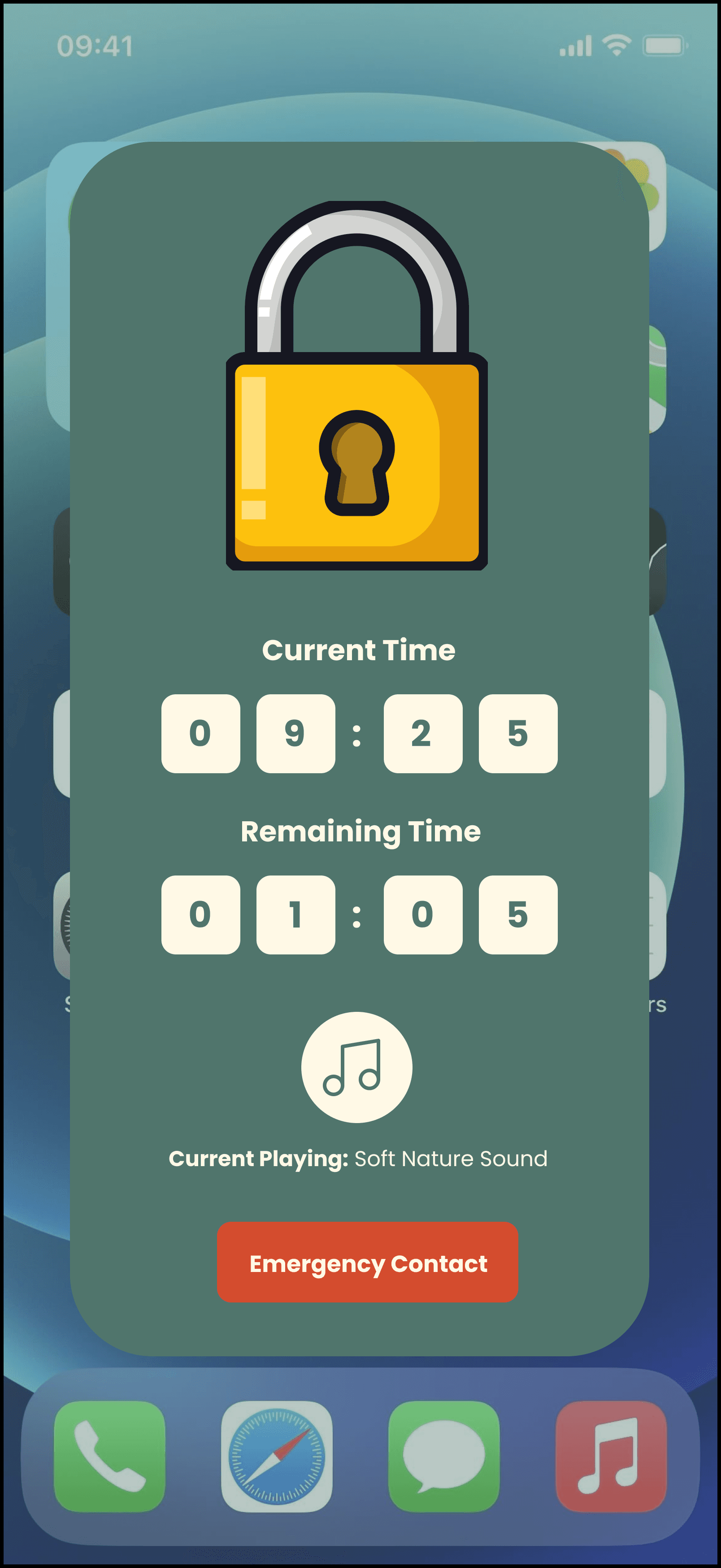
Furthermore, an app which restricts access to other apps while the user is engaged in an active study session will enforce and promote focus on the academic tasks they are working on.
Identifying the Gap
Interviewees were keenly aware of which time and task management strategies were helpful to them. However, they often lacked structure or enforcement needed to consistently use those strategies. Both participants stated that working with others, and having external deadlines and meetings with peers or instructors would motivate them and help them stay on track.
Both vocalized an interest and need for co-working/studying sessions.
Existing Painpoints
It can be hard to set up and seek out study/work sessions, especially for students with ADHD who may need external support to enforce their study habits.
Generalized studying sessions might be less helpful because students may not be working on related assignments, cannot assist and help each other in the studying process.
Students may get distracted during their work sessions since they still rely on personal willpower to maintain focus.

Ideation
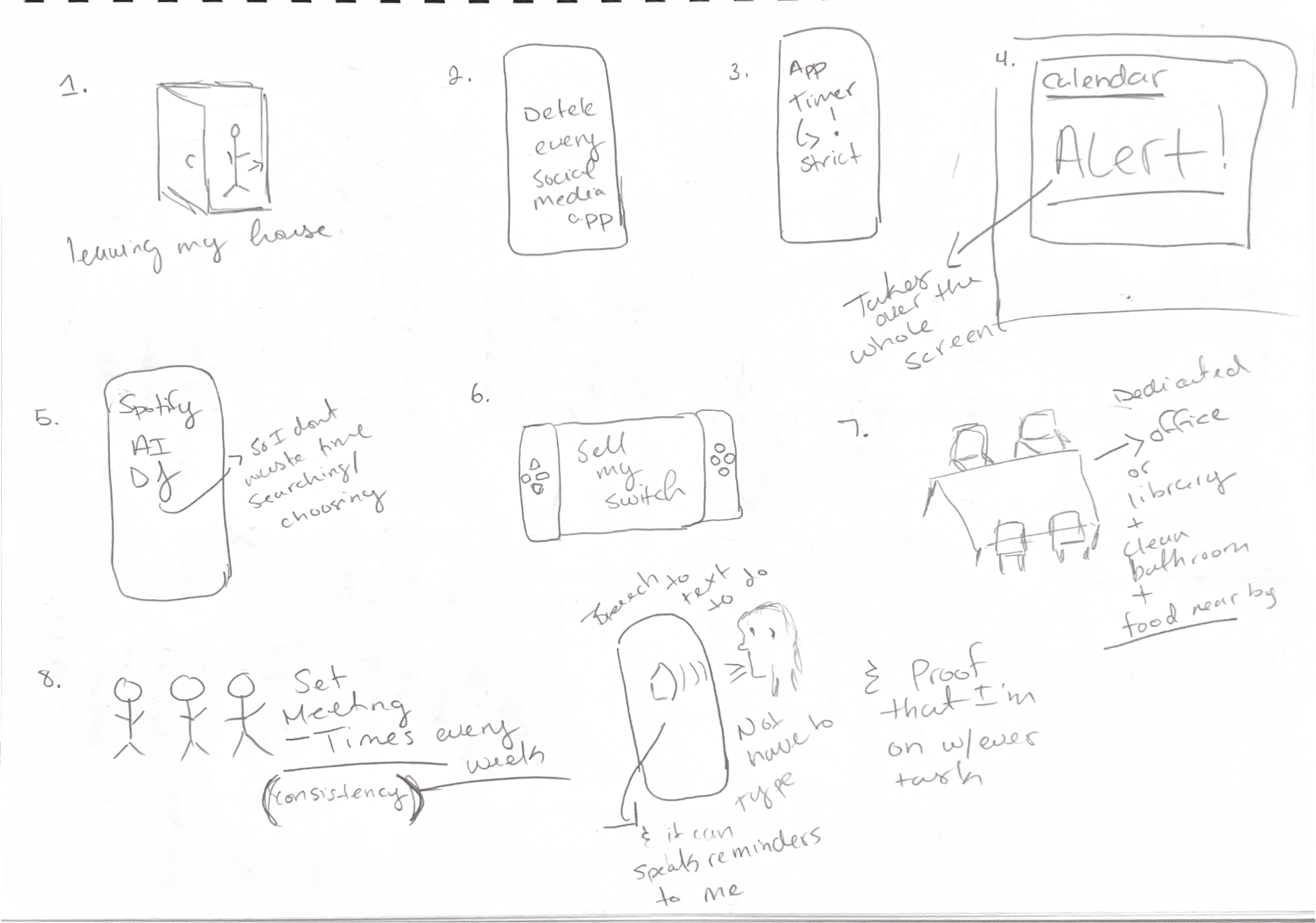
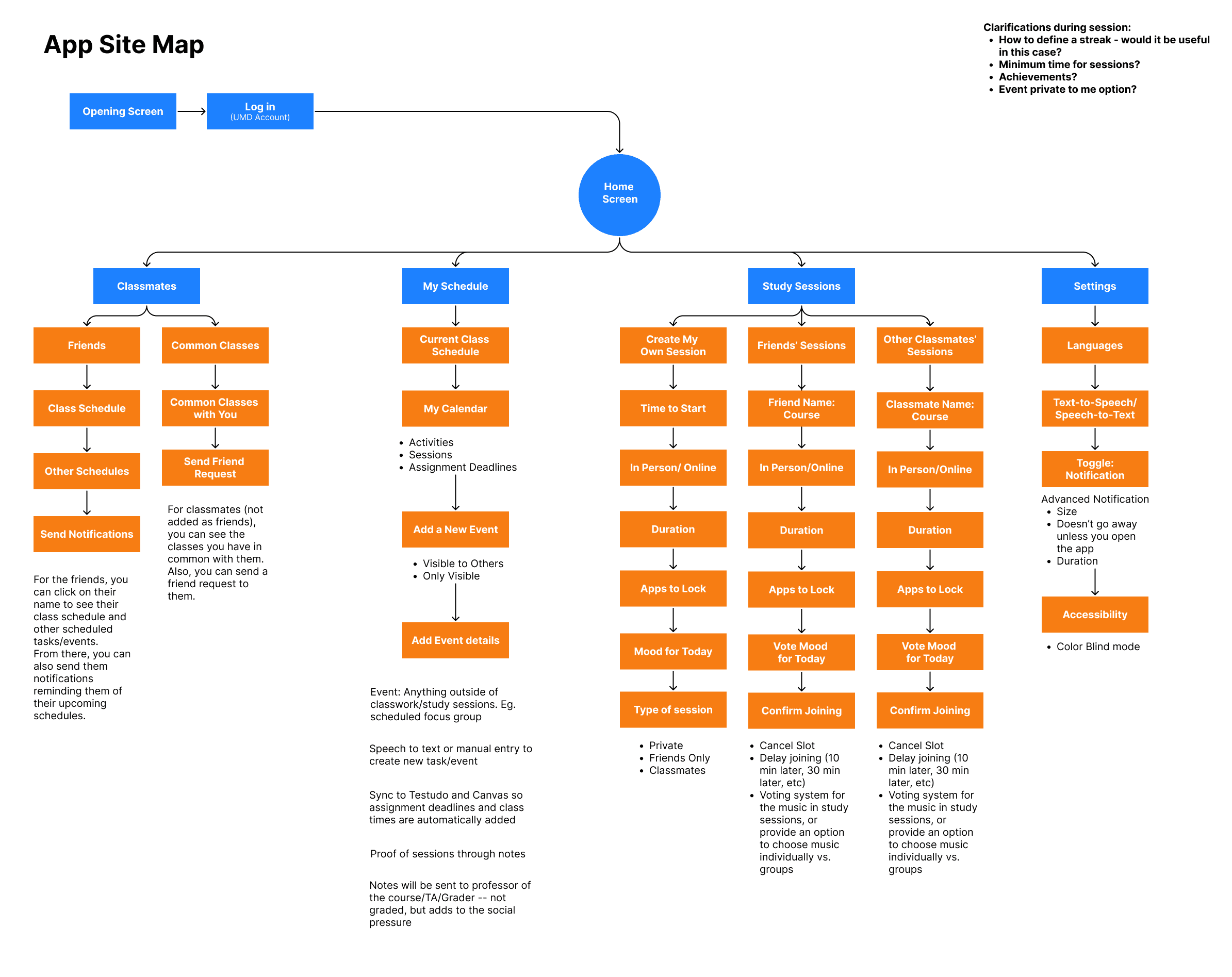
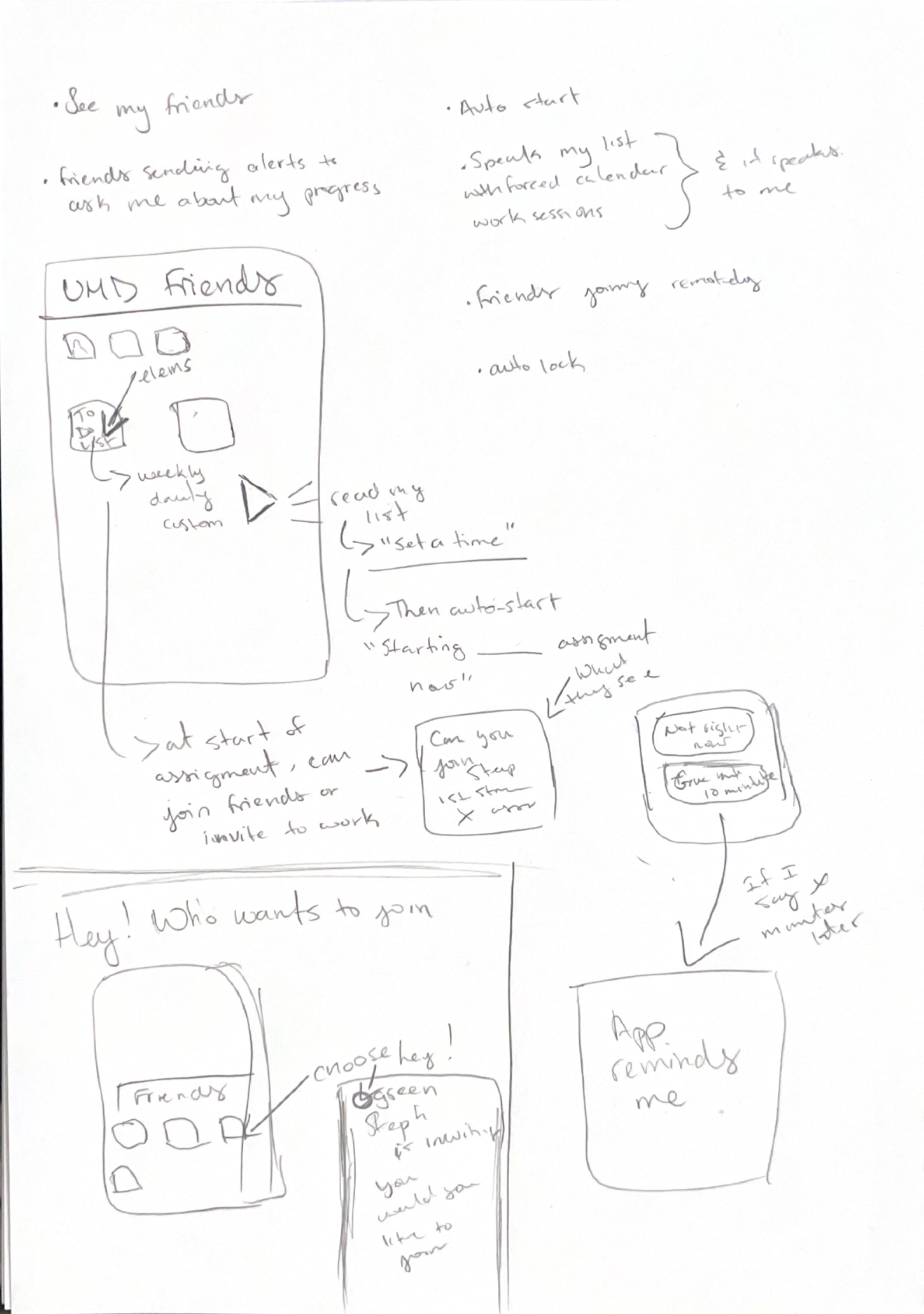
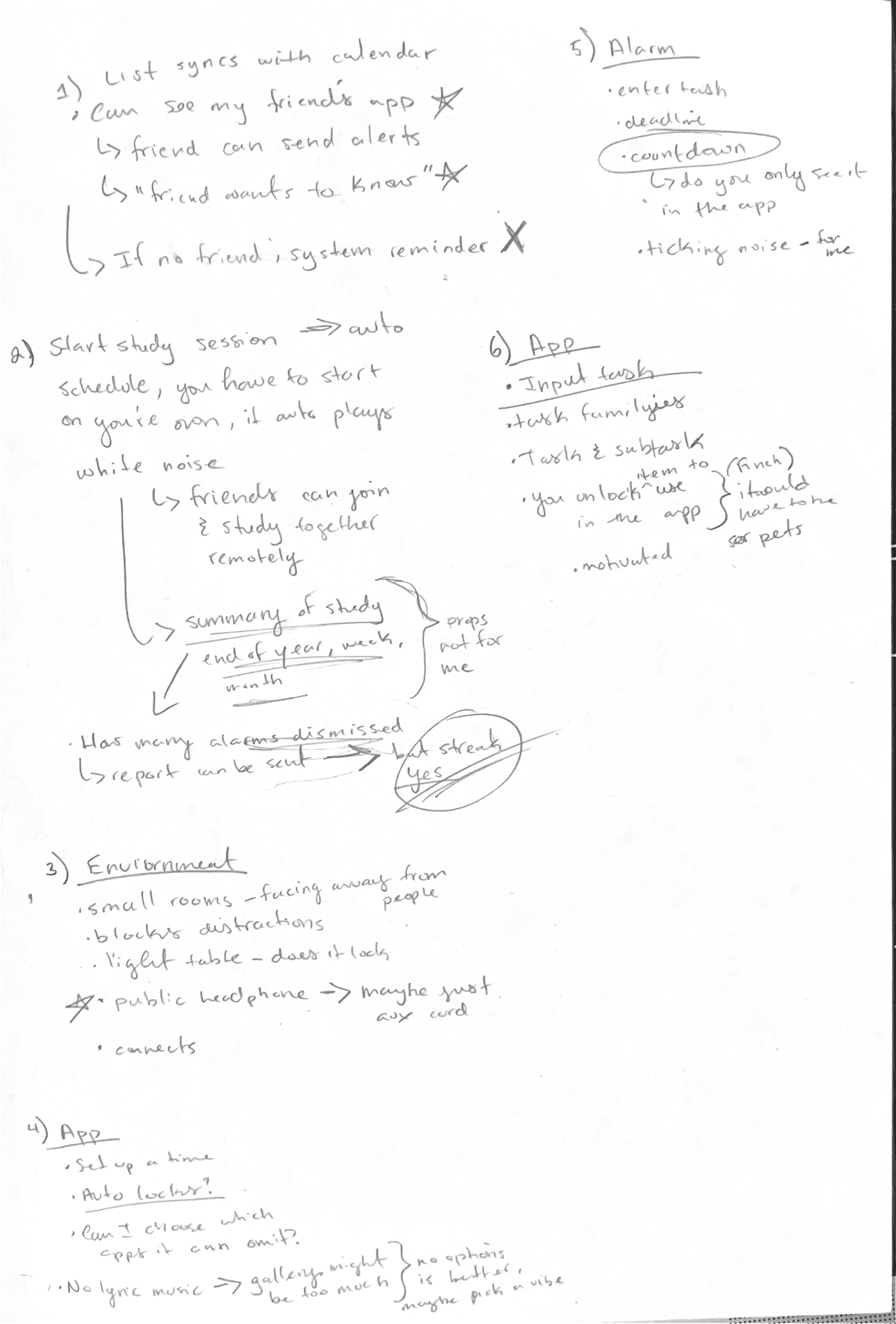
As a team, we outlined the key features and user tasks which the app needed to support. As we developed the tasks and features, we gained a better understanding of how to sort the information on each page for efficient wayfinding.
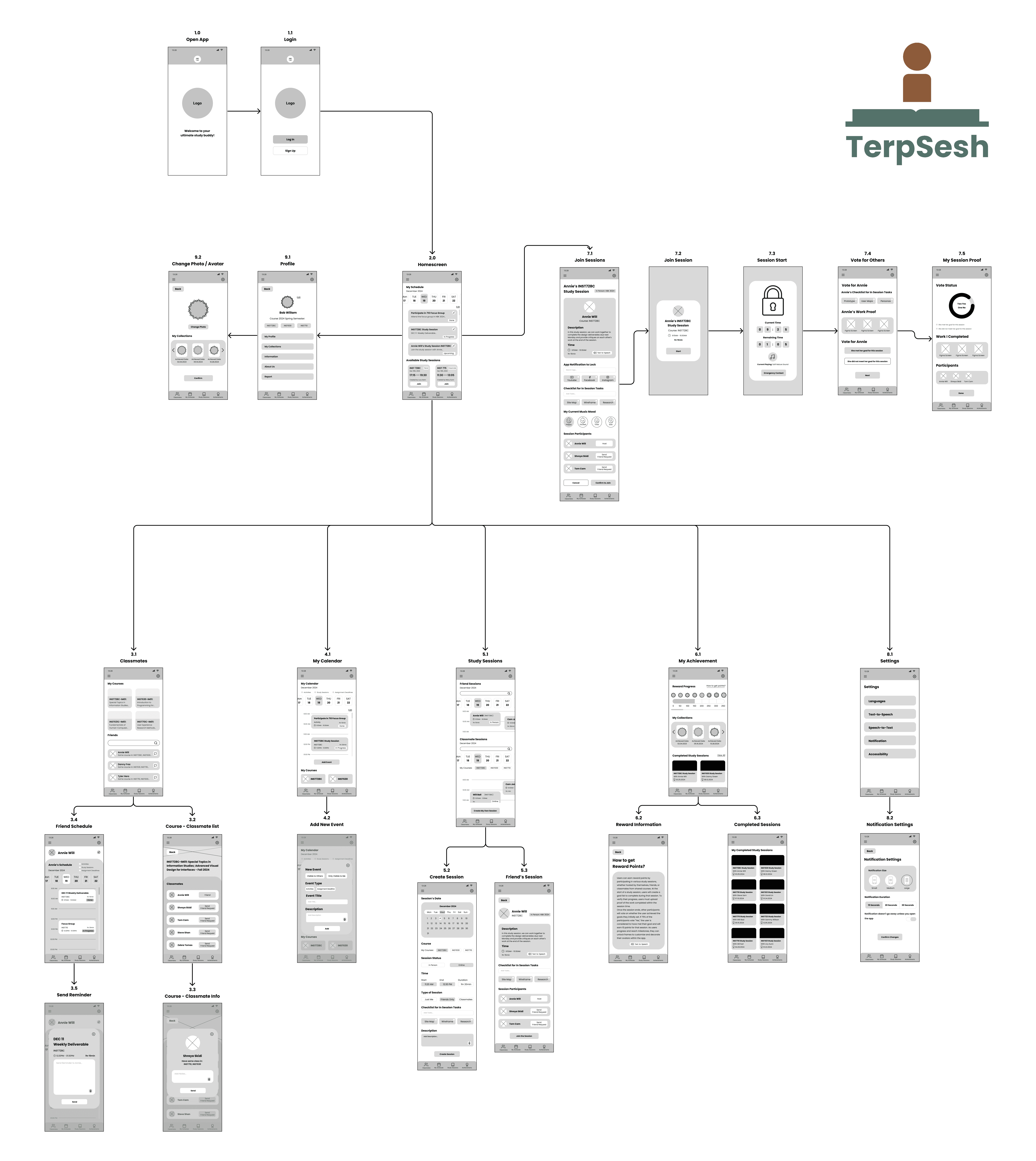
Through this process, we created a site map by drawing out which pages of the app would host specific features, details of the task flow, as well as the navigation between pages.
User Flows
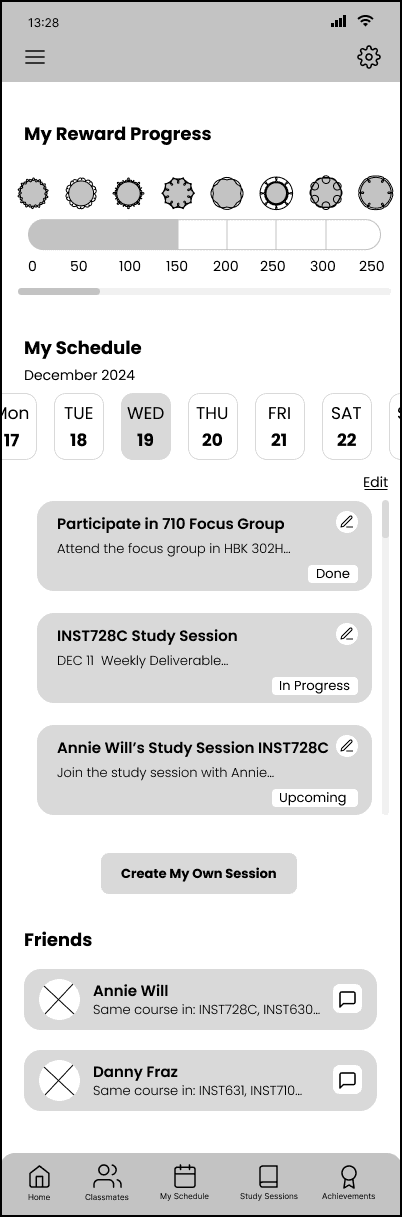
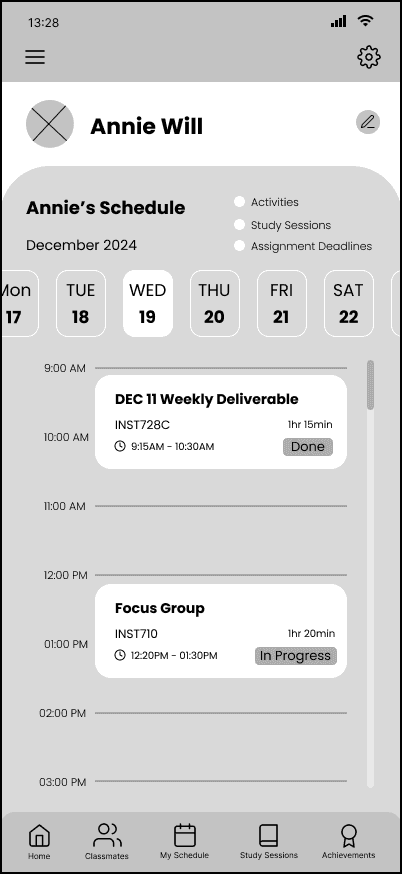
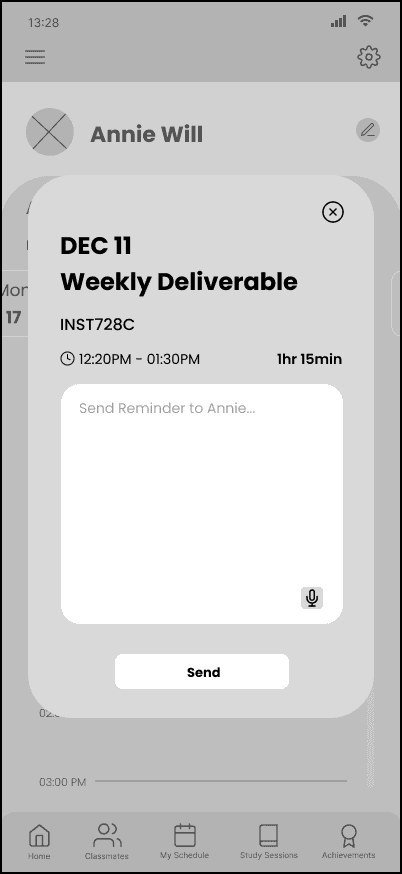
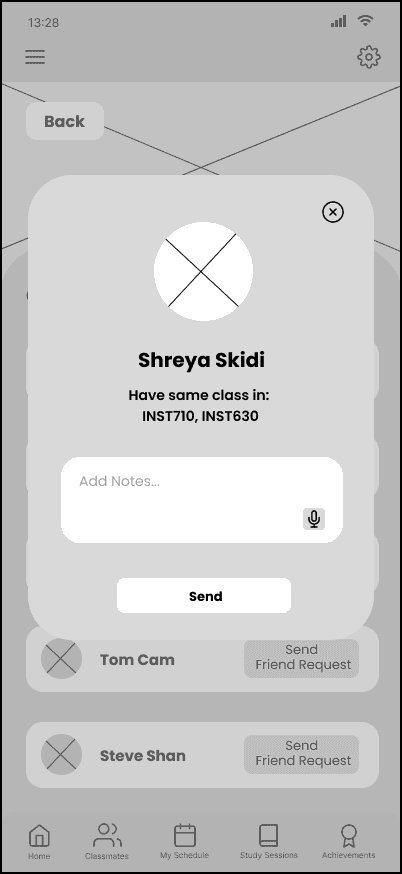
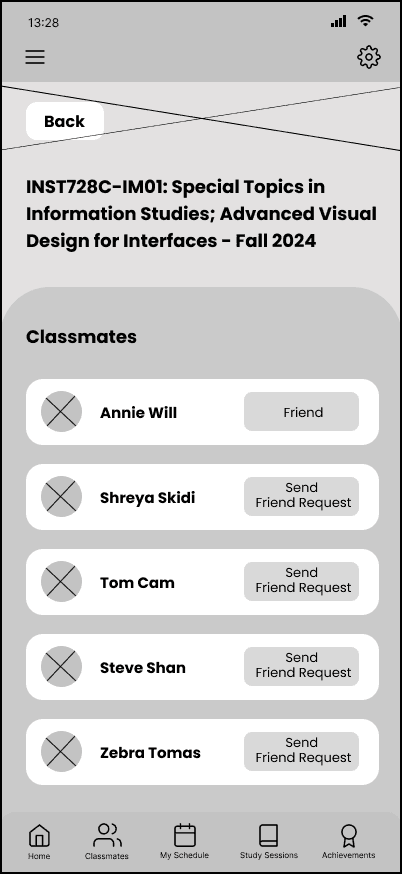
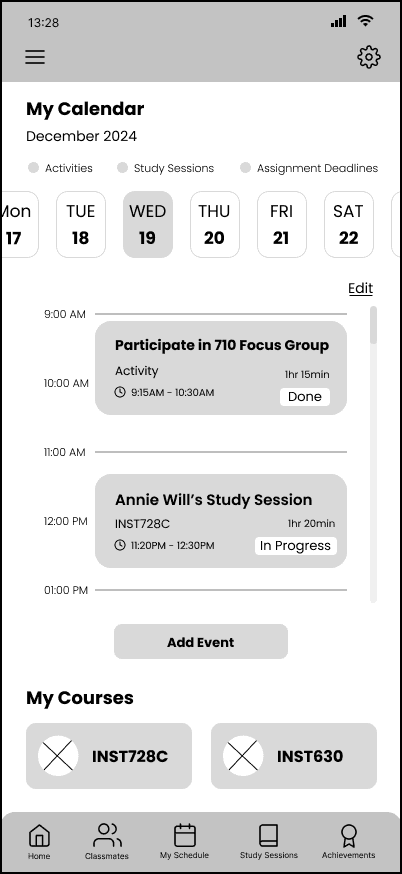
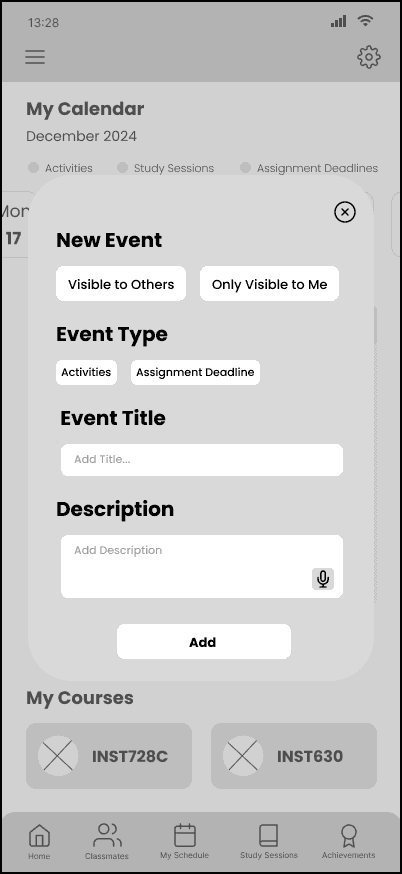
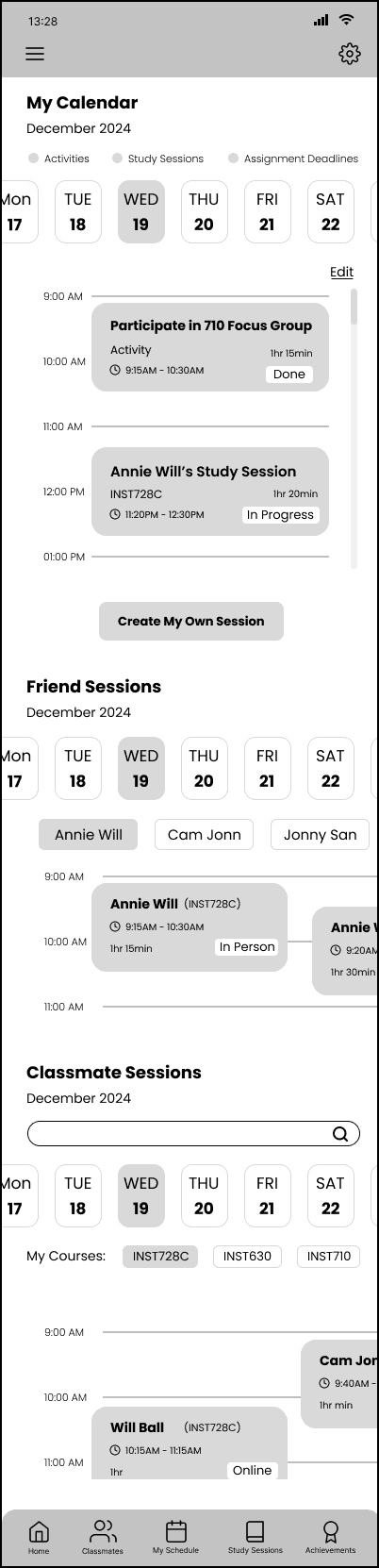
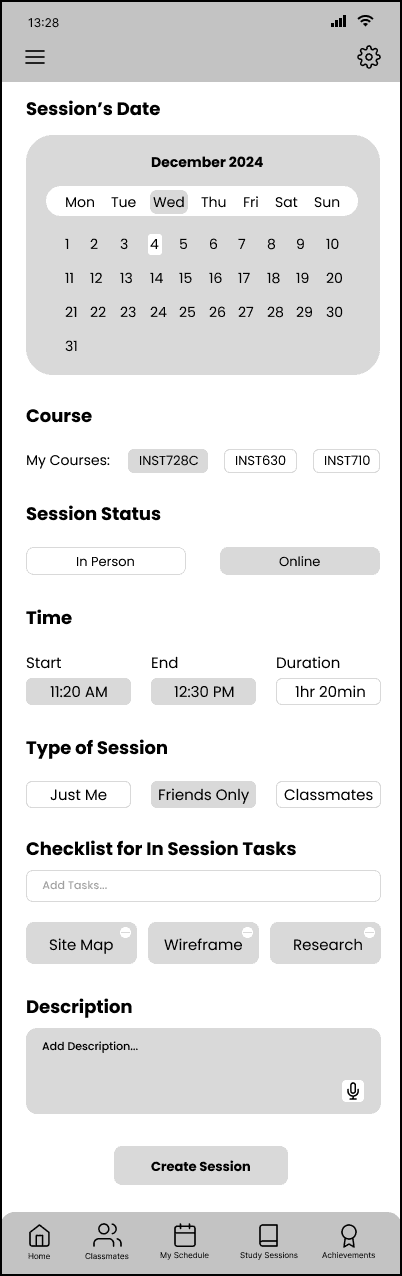
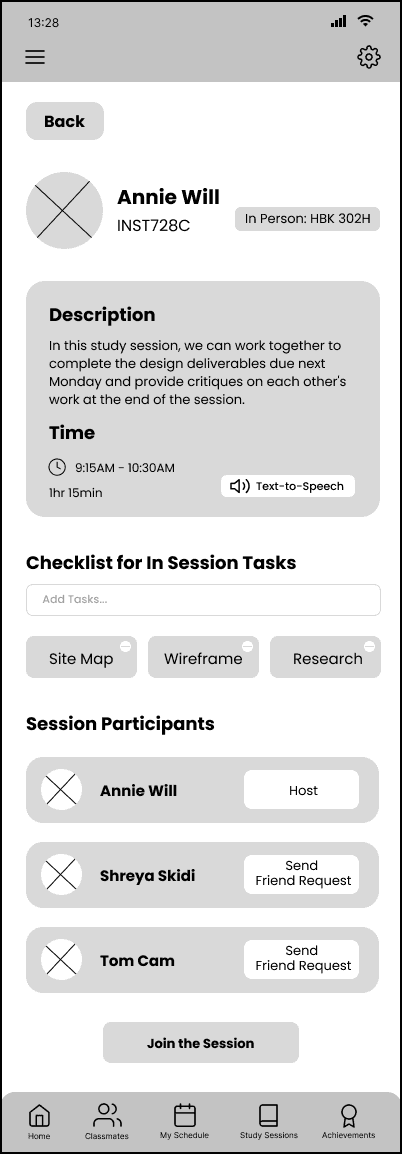
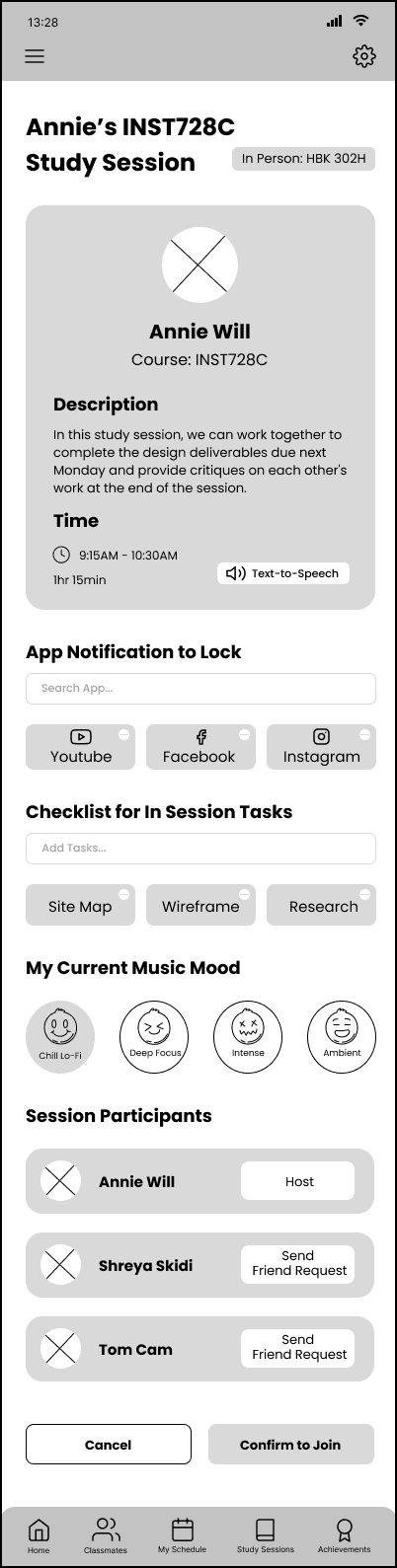
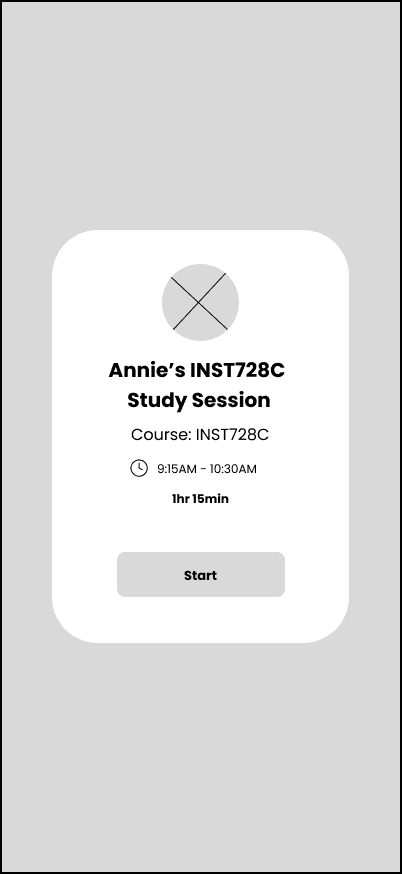
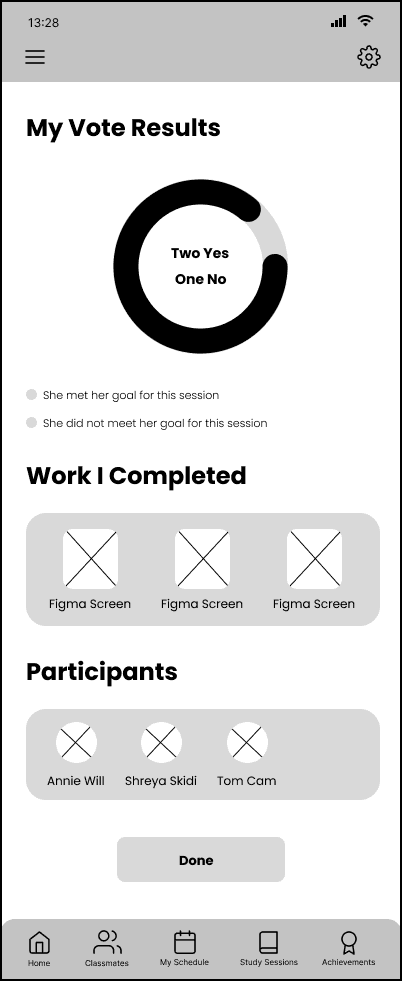
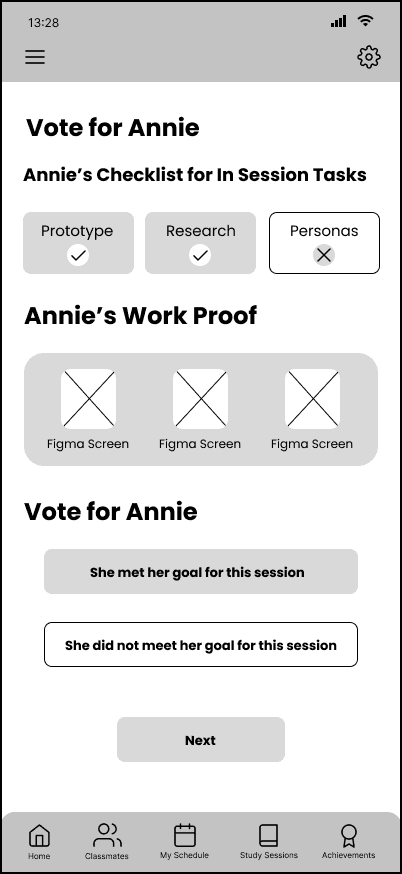
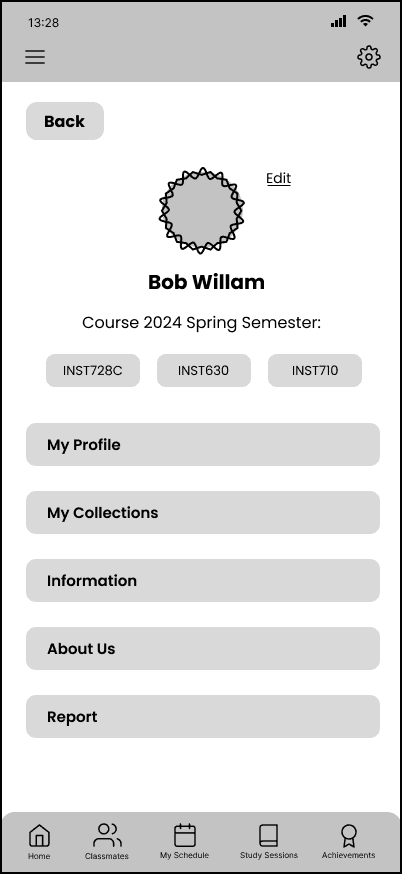
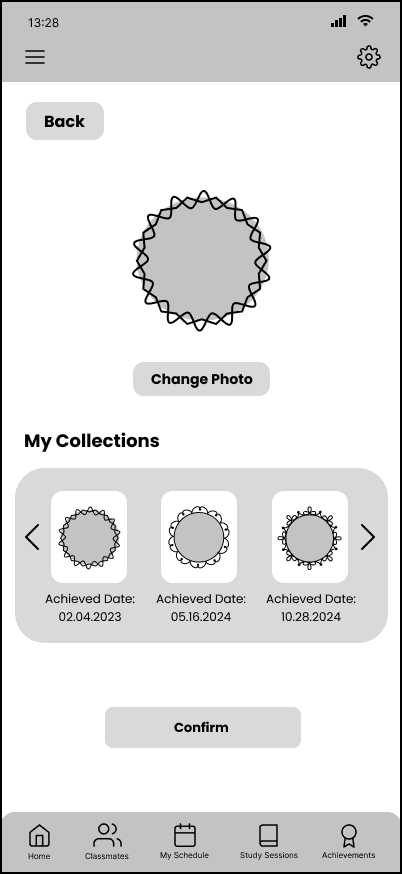
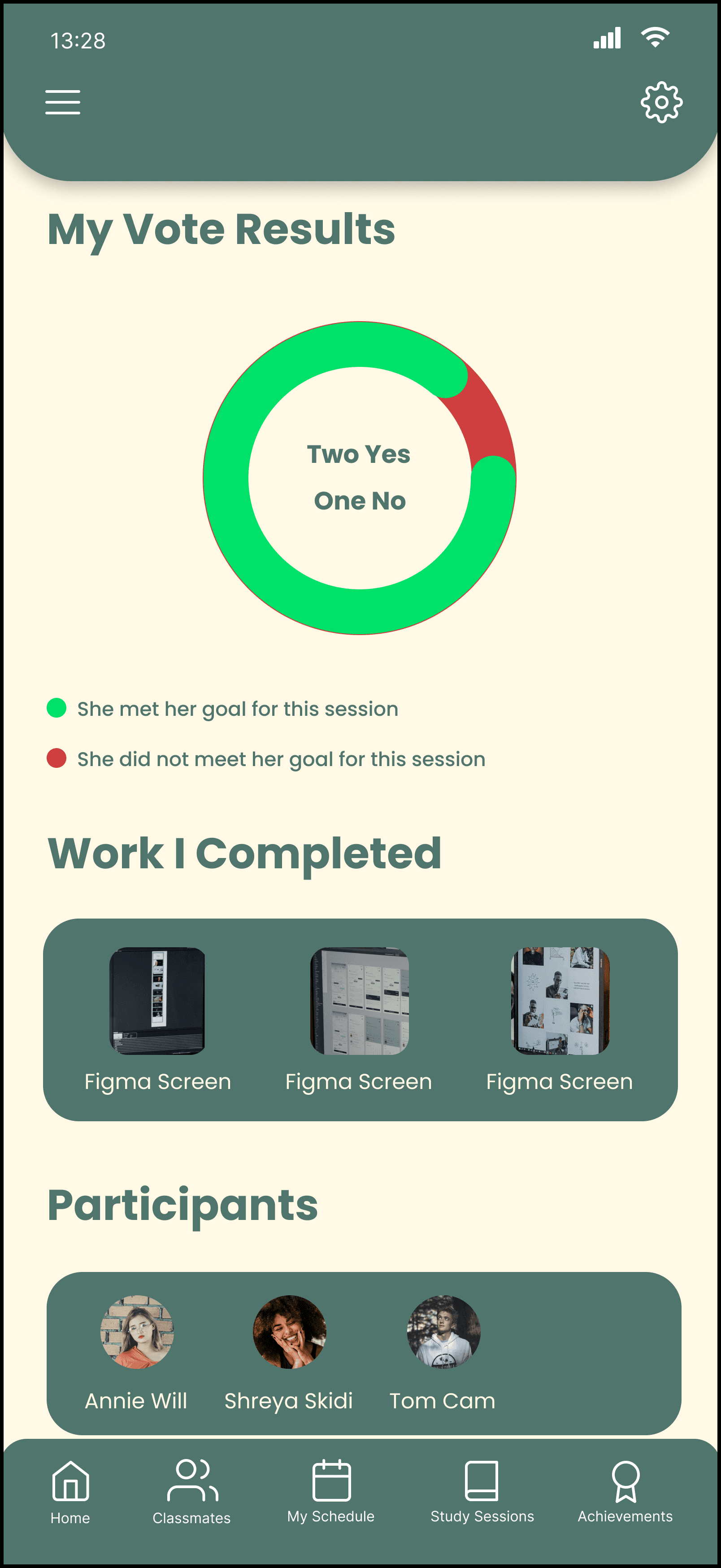
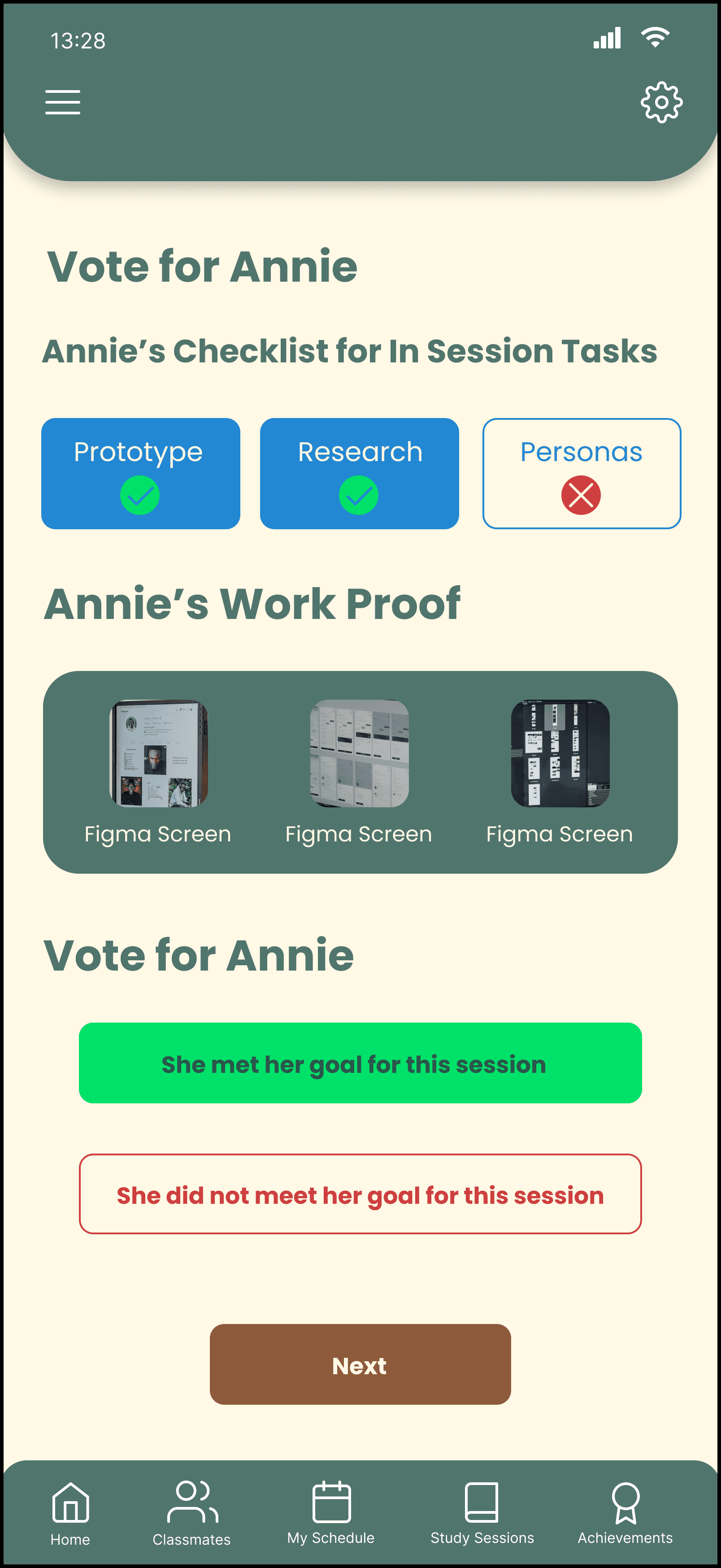
We also identified specific user flows, such as finding a study session and joining, creating a study session and joining, and reflecting on productivity at the end of a study session. We created a few low-fi wireframes based on the user flows to visualize what the app design might look like.
Low-Fidelity
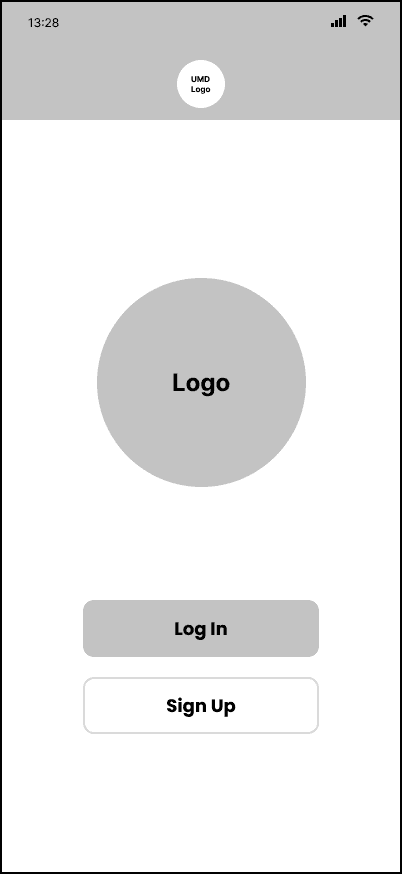
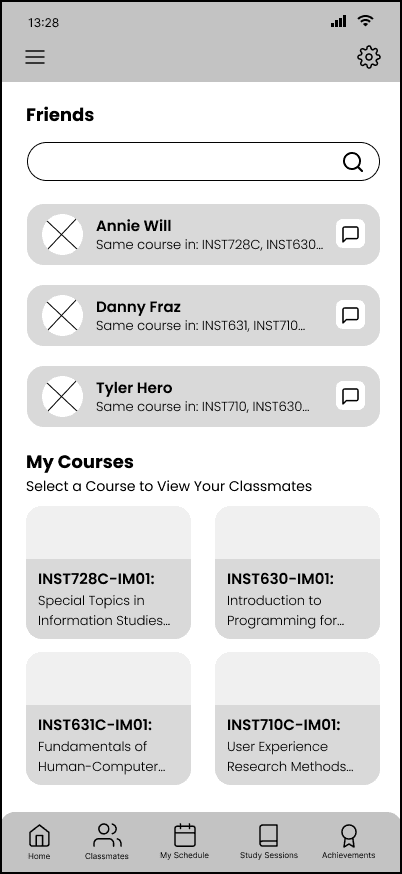
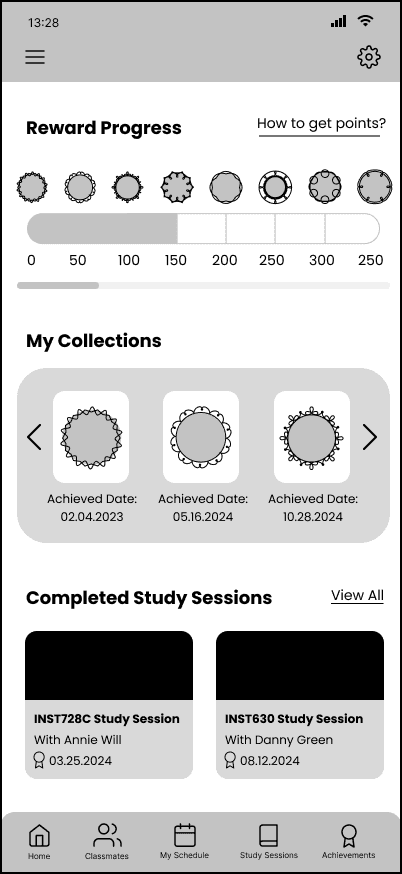
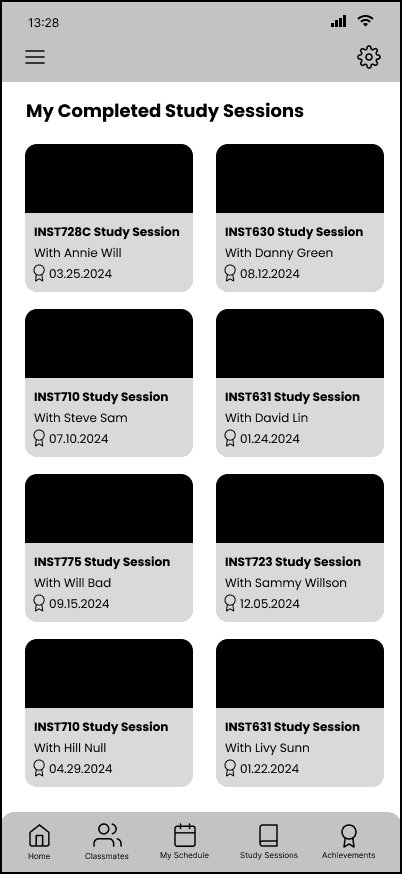
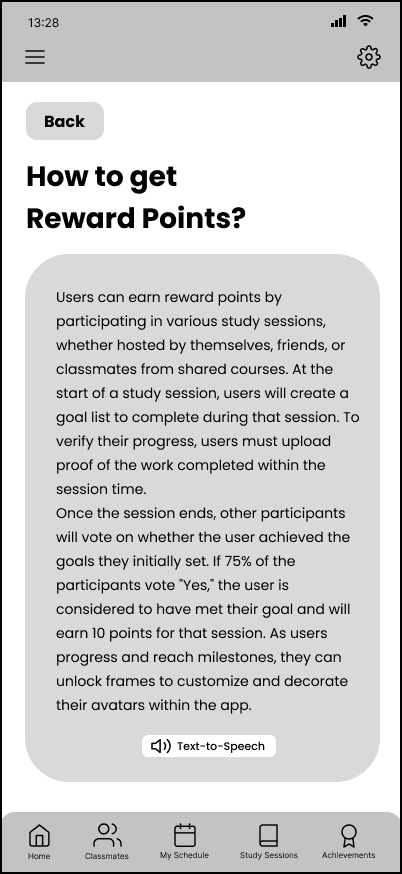
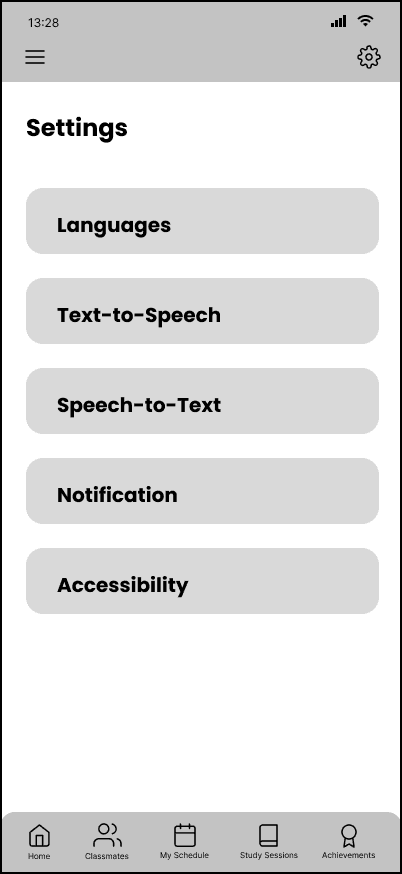
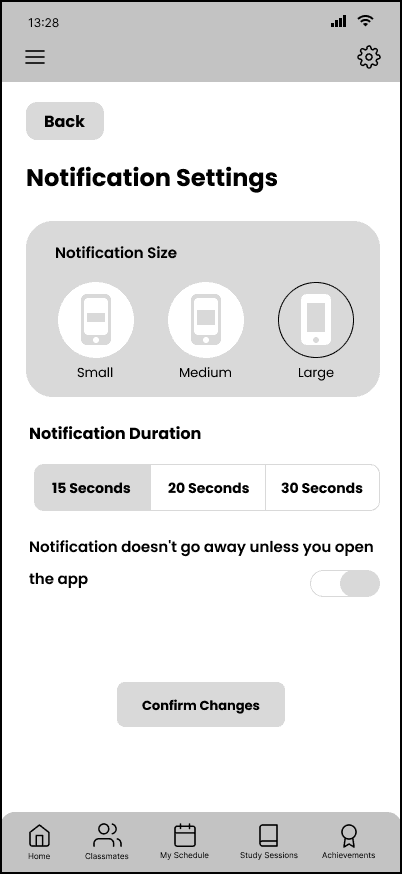
From the site map and the user flows, we created the low-fi prototype by creating more screens corresponding to the needs of the user and the planned app features.
User Testing
Co-design was a critical part of our process. After creating the site map, user flows, and low-fi prototype, we worked with one of our participants to review and critique them. They worked as a co-designer to help us better understand which features were distracting, confusing, or would otherwise not be helpful to users with ADHD. From this, we all worked together to sketch out and identify areas of improvement, new features, and flow improvements.
Changes Made
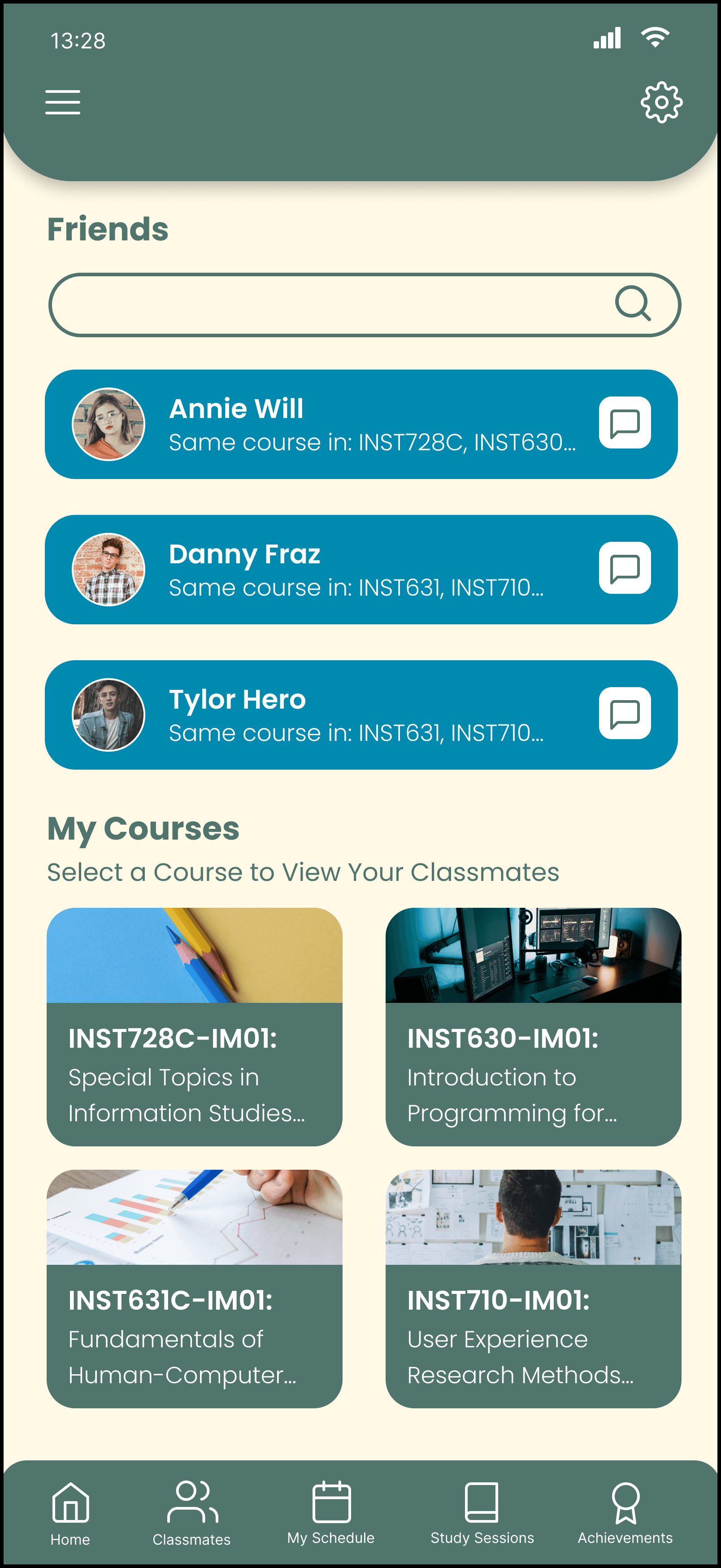
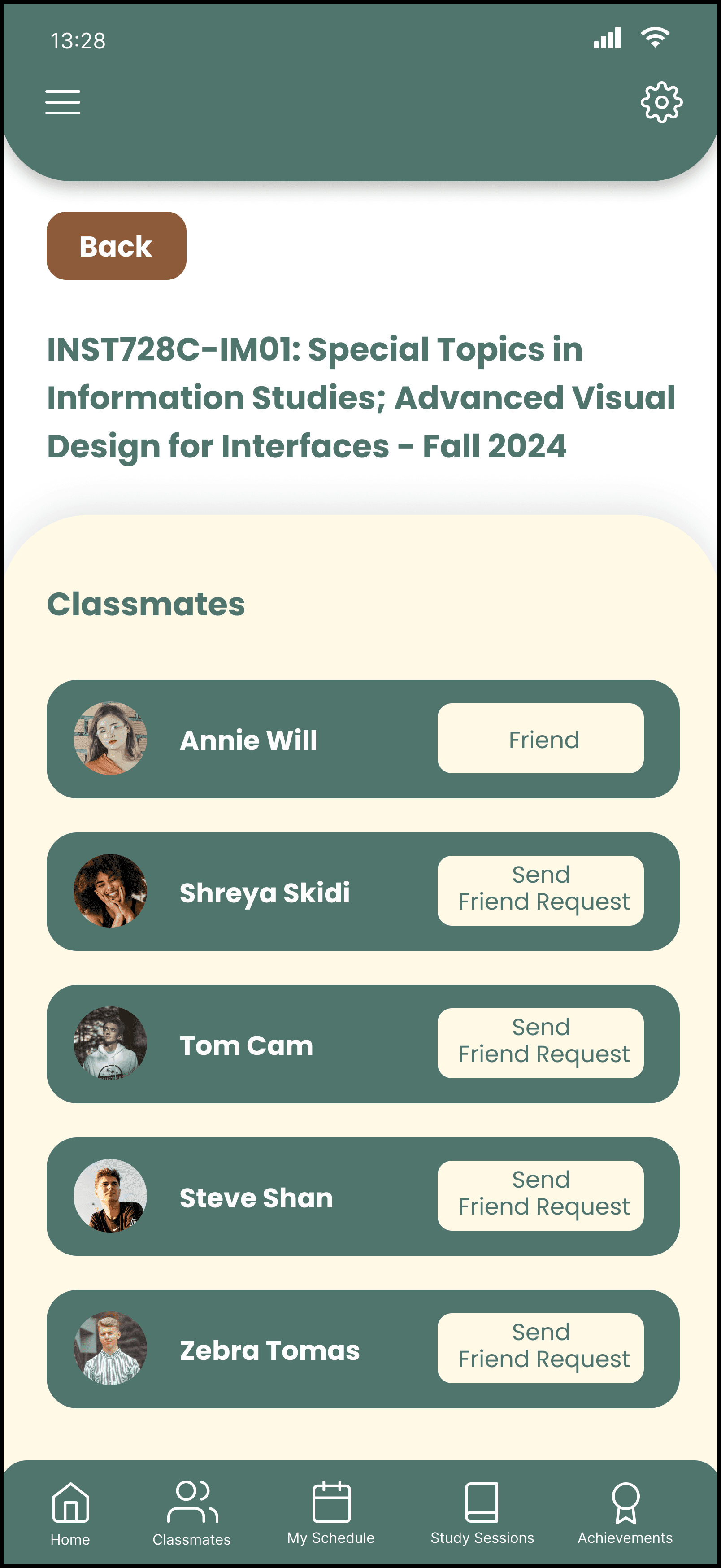
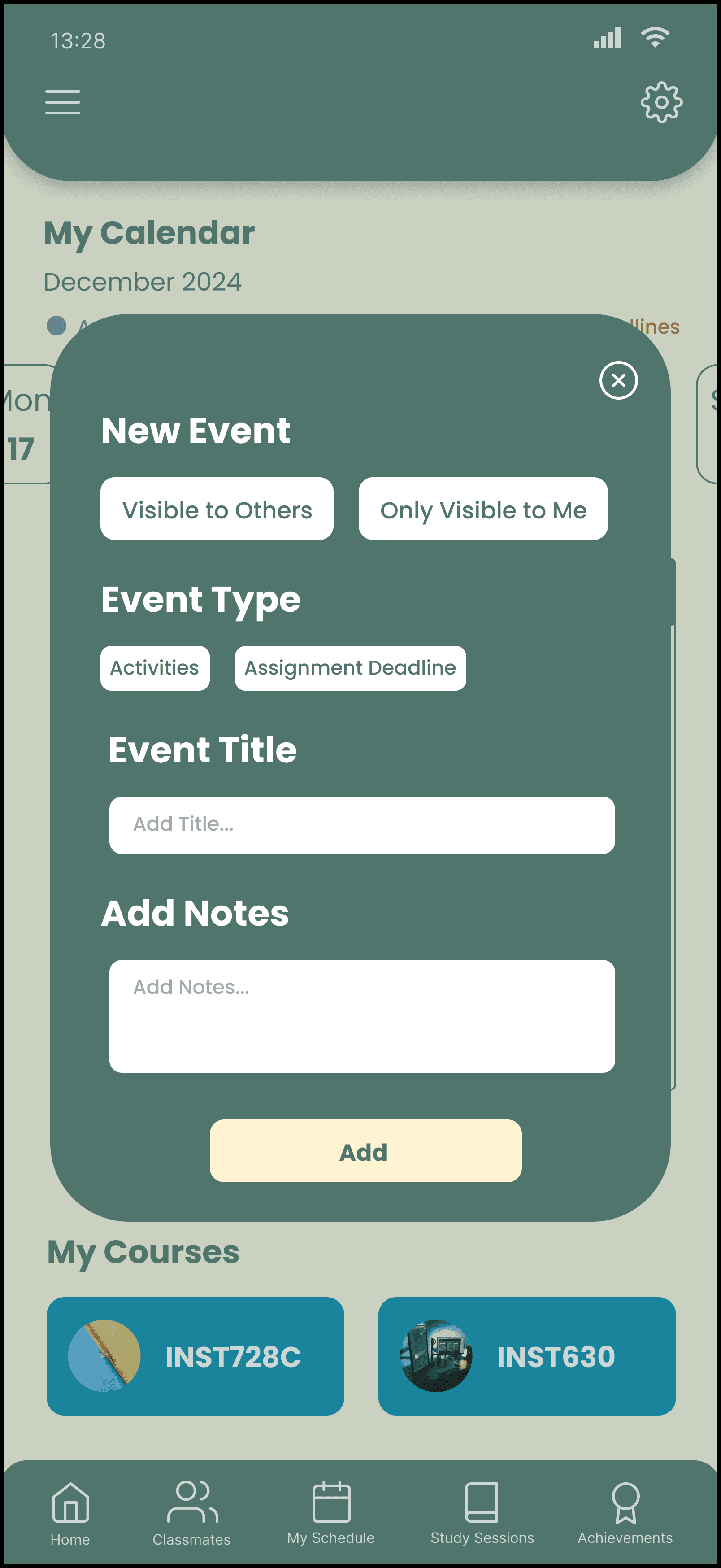
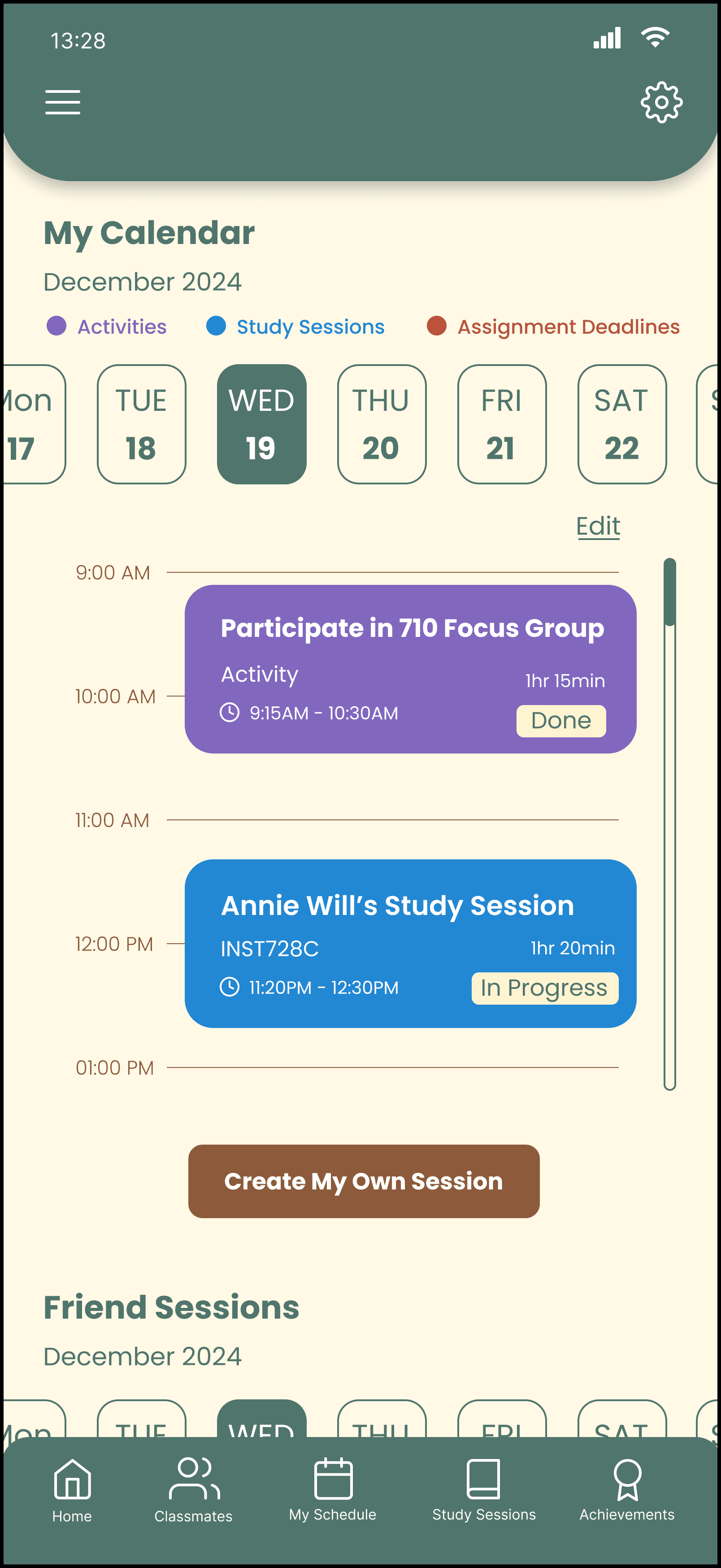
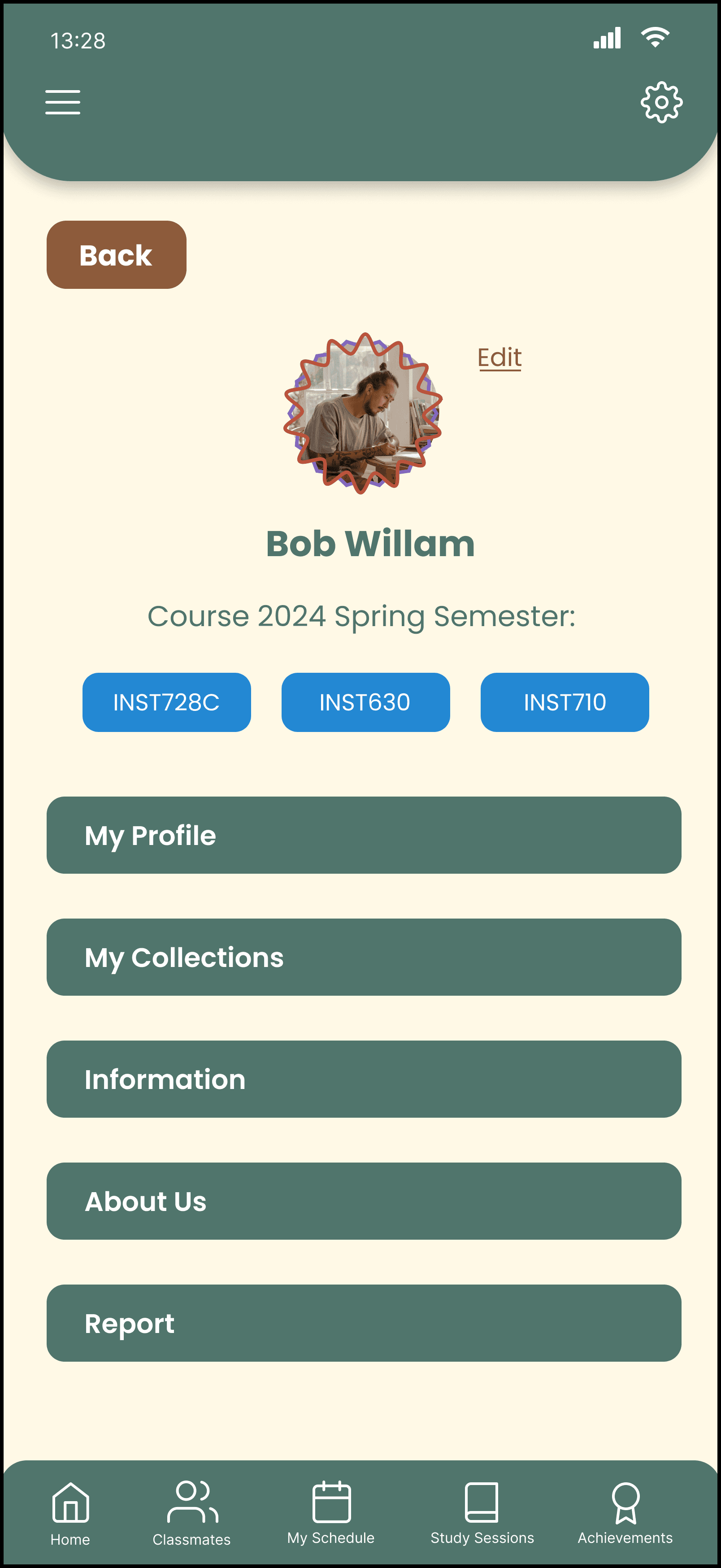
From the co-designing session, we made changes to the organization of pages such as “Friends” and “My Courses” sections, as well as adding subtitles to section headings to give more context to the user.
High-Fidelity
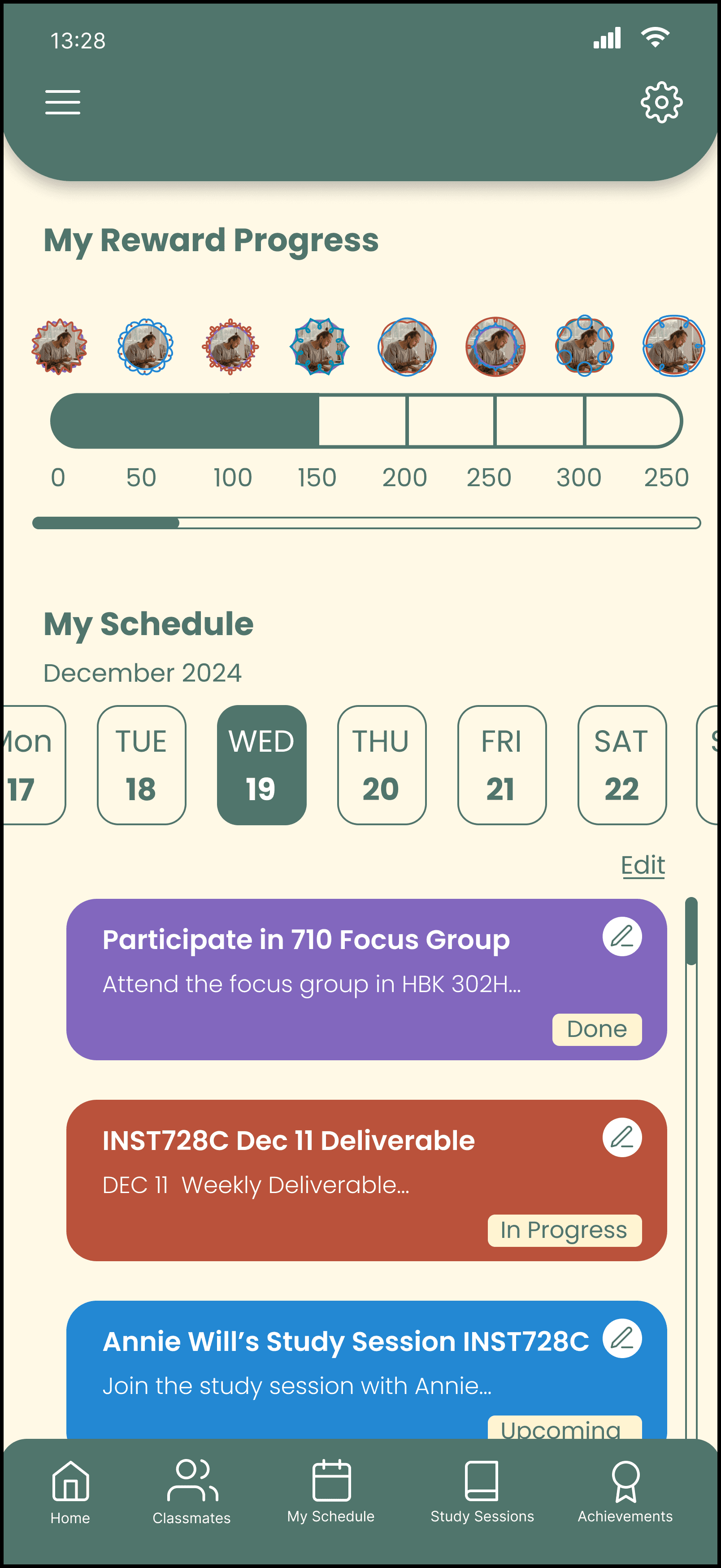
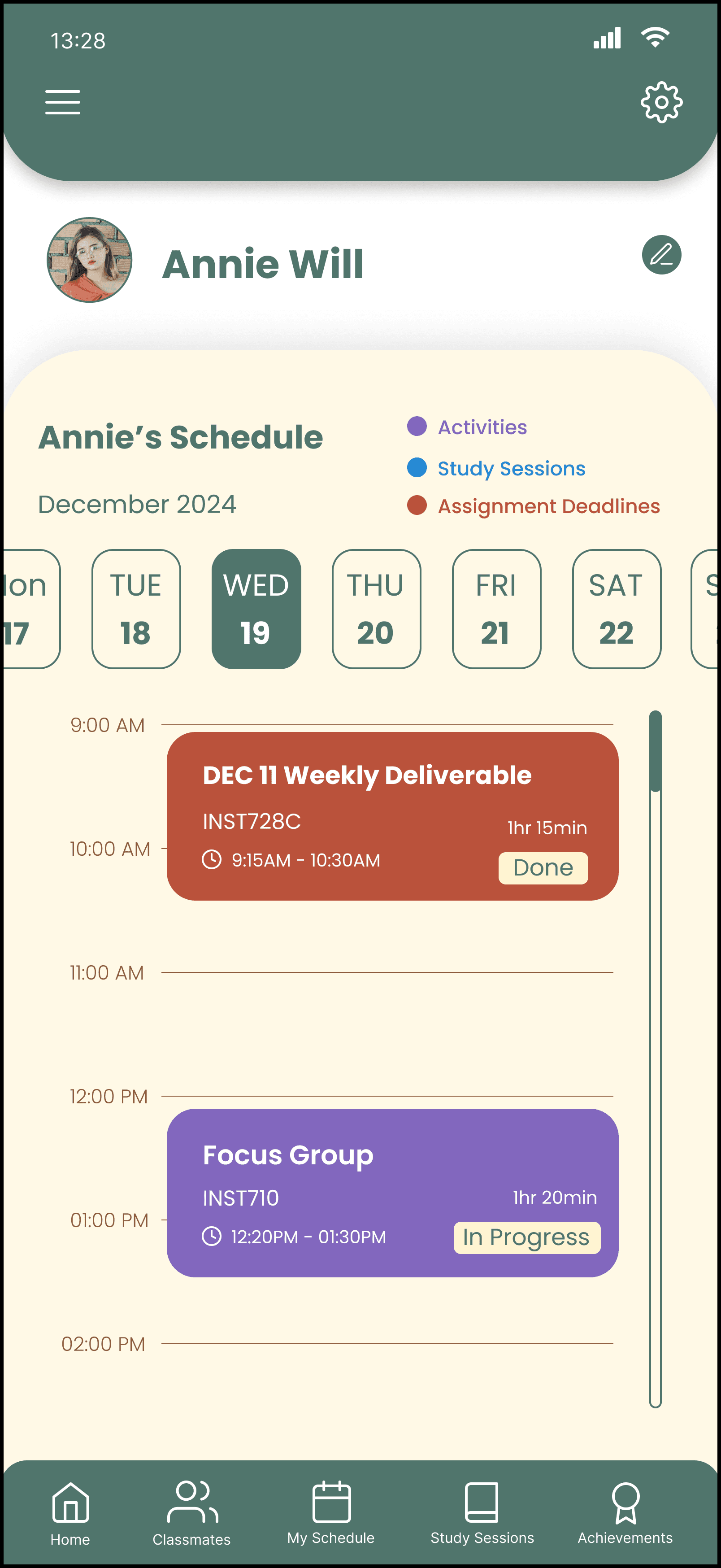
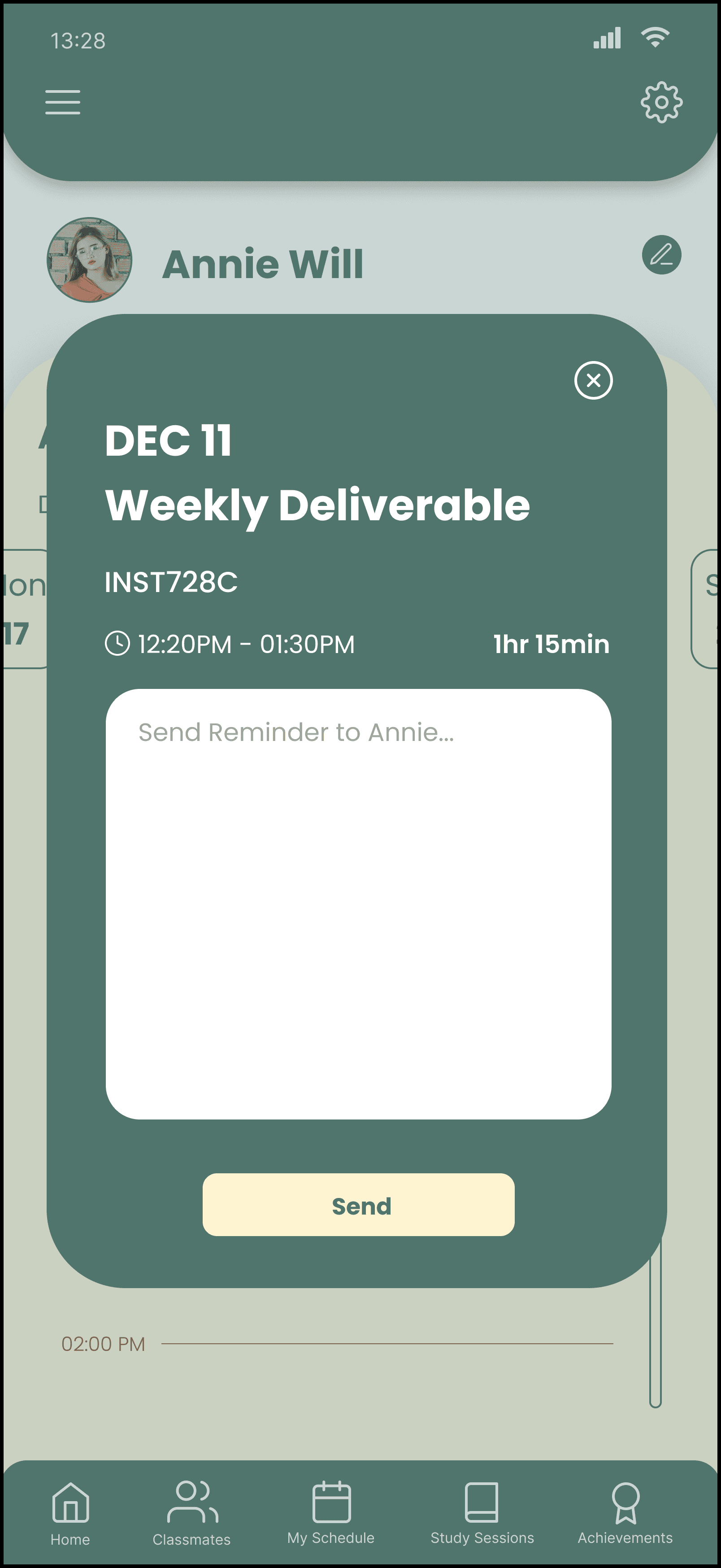
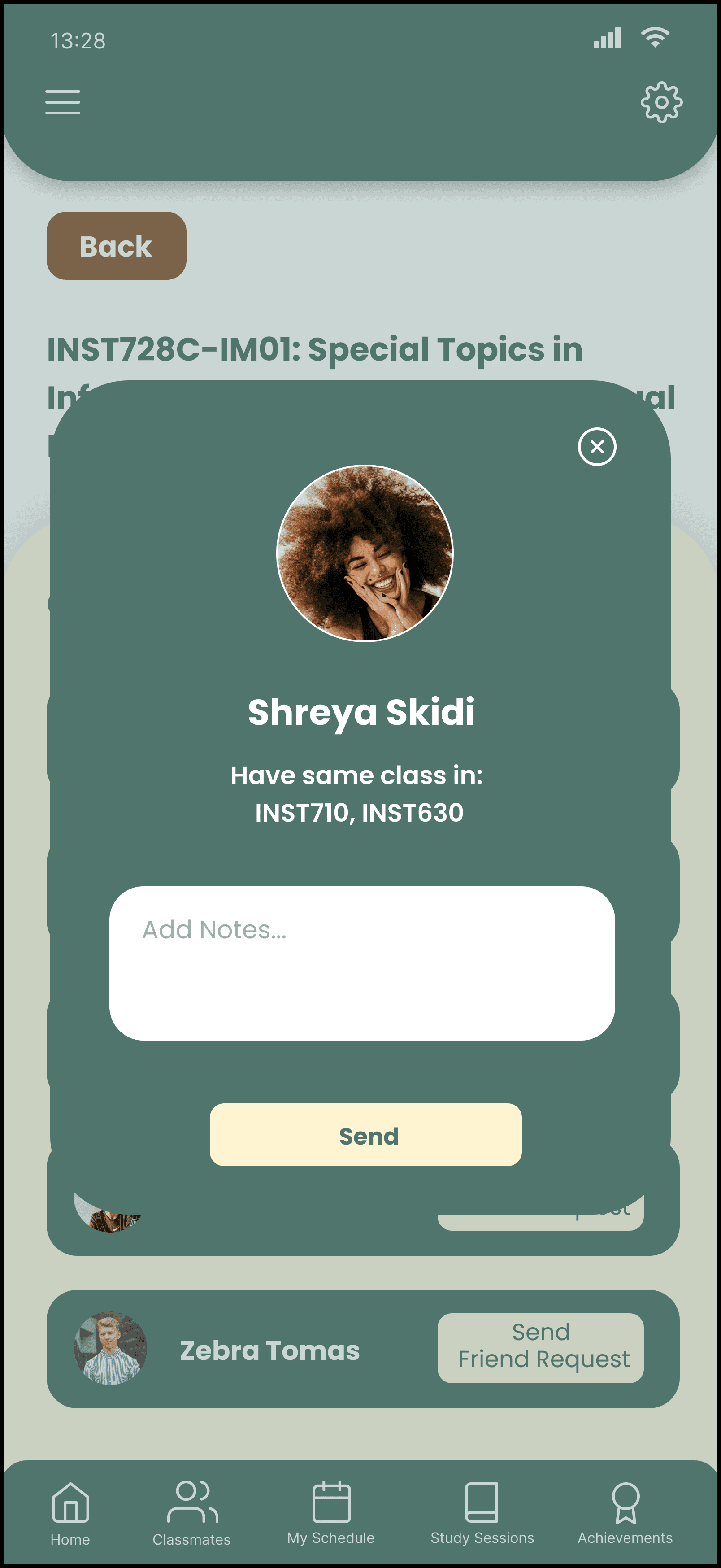
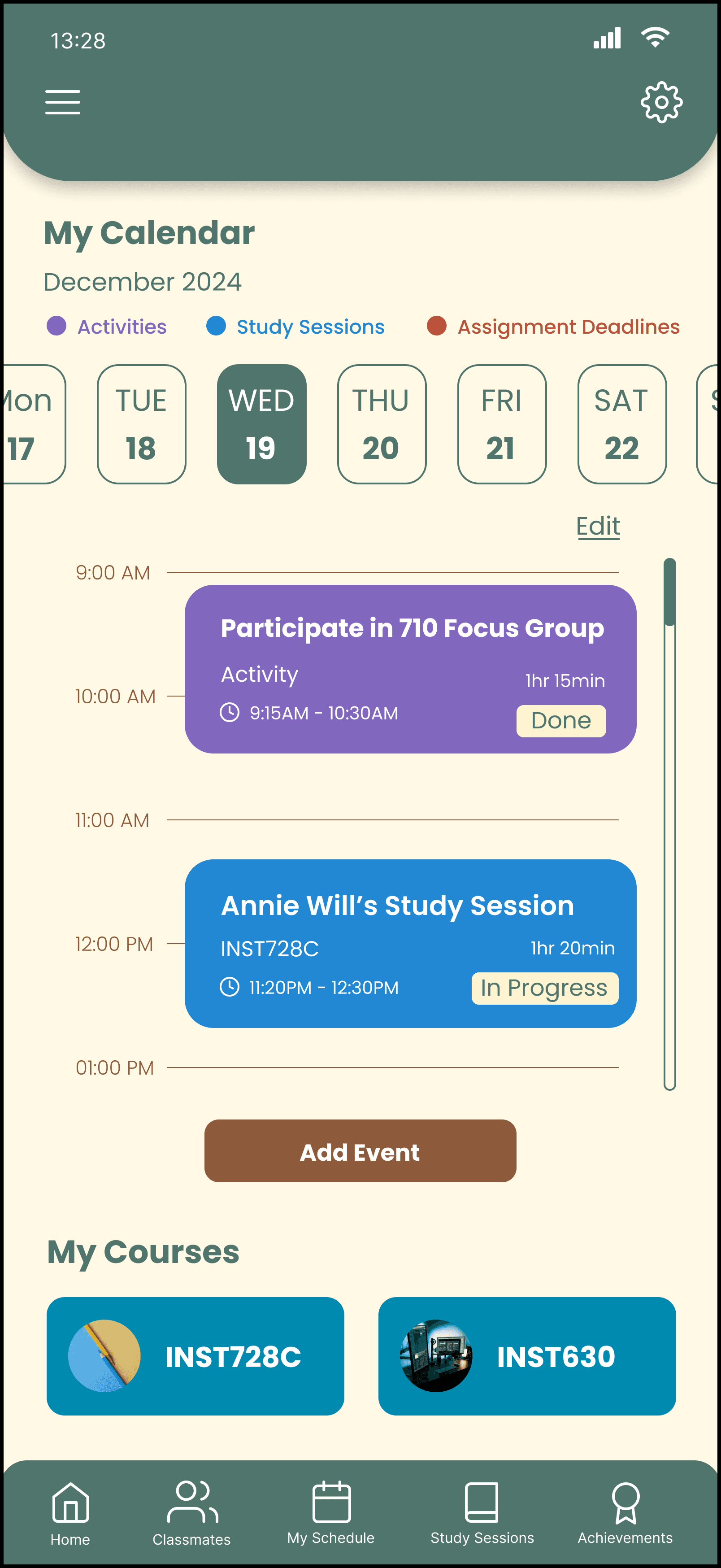
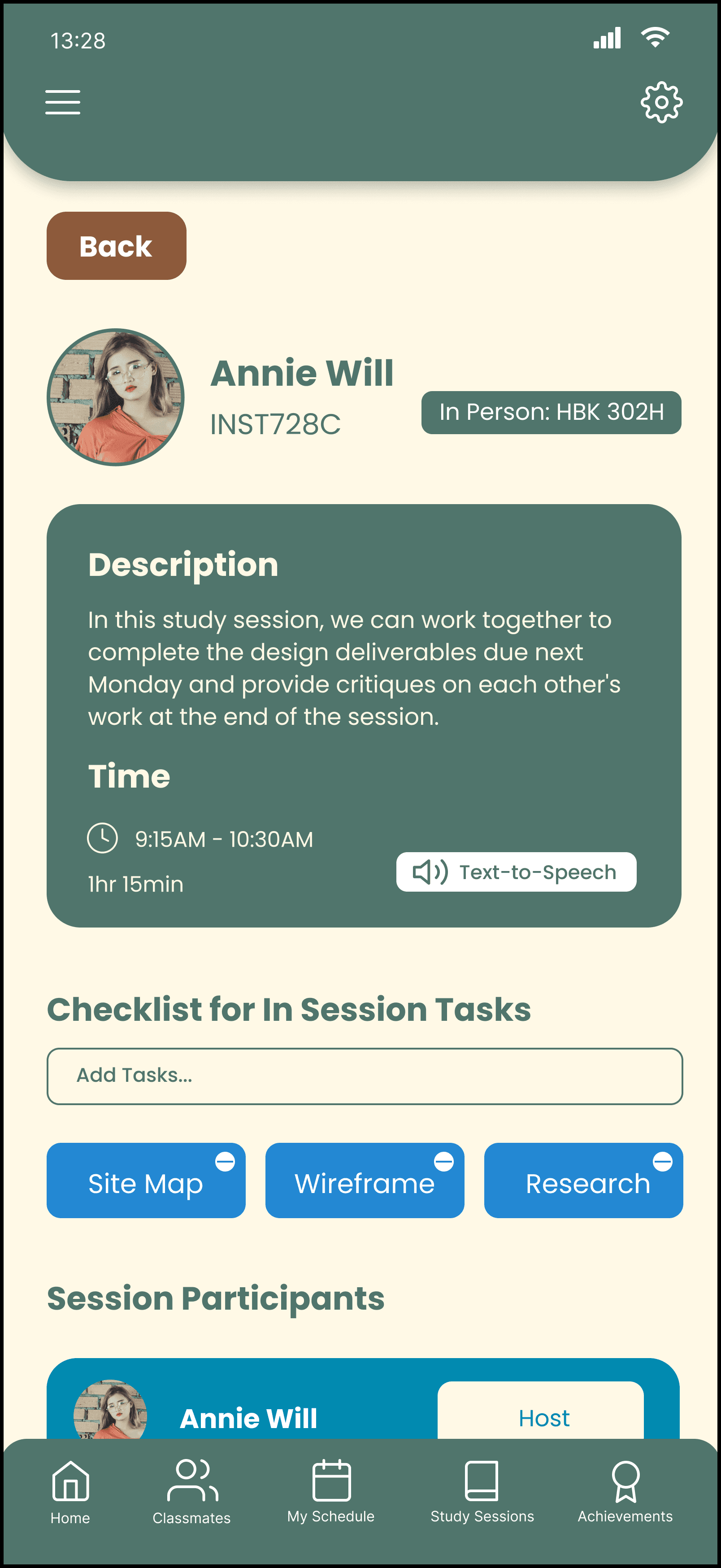
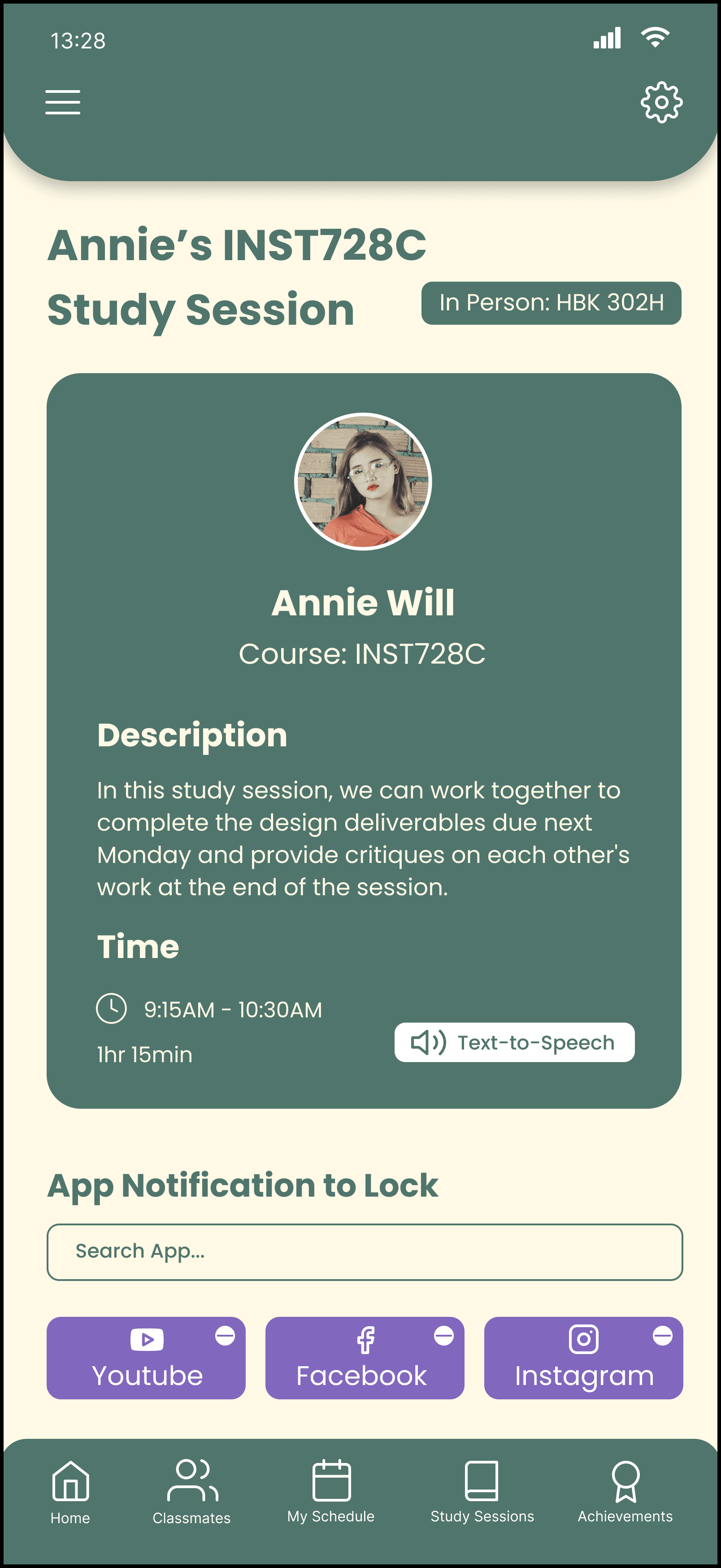
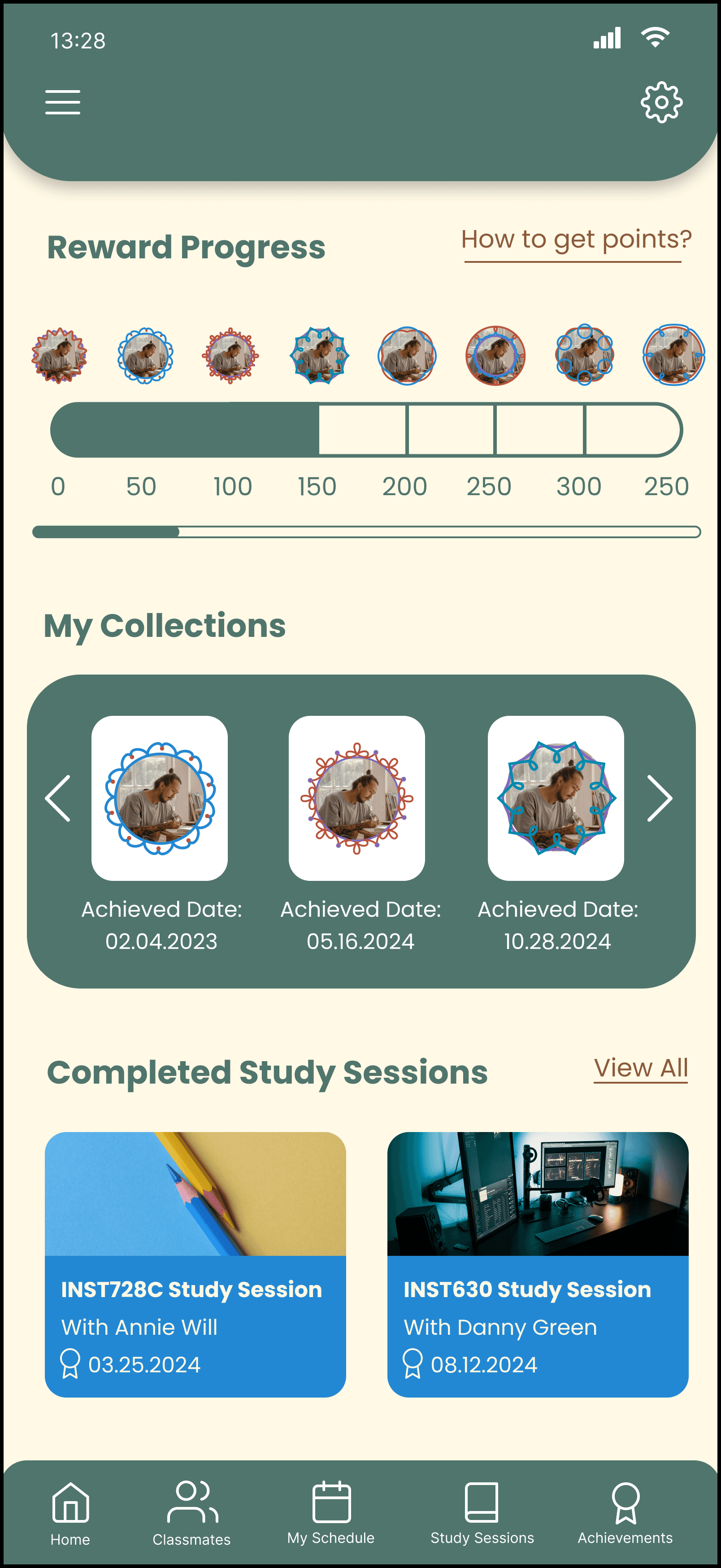
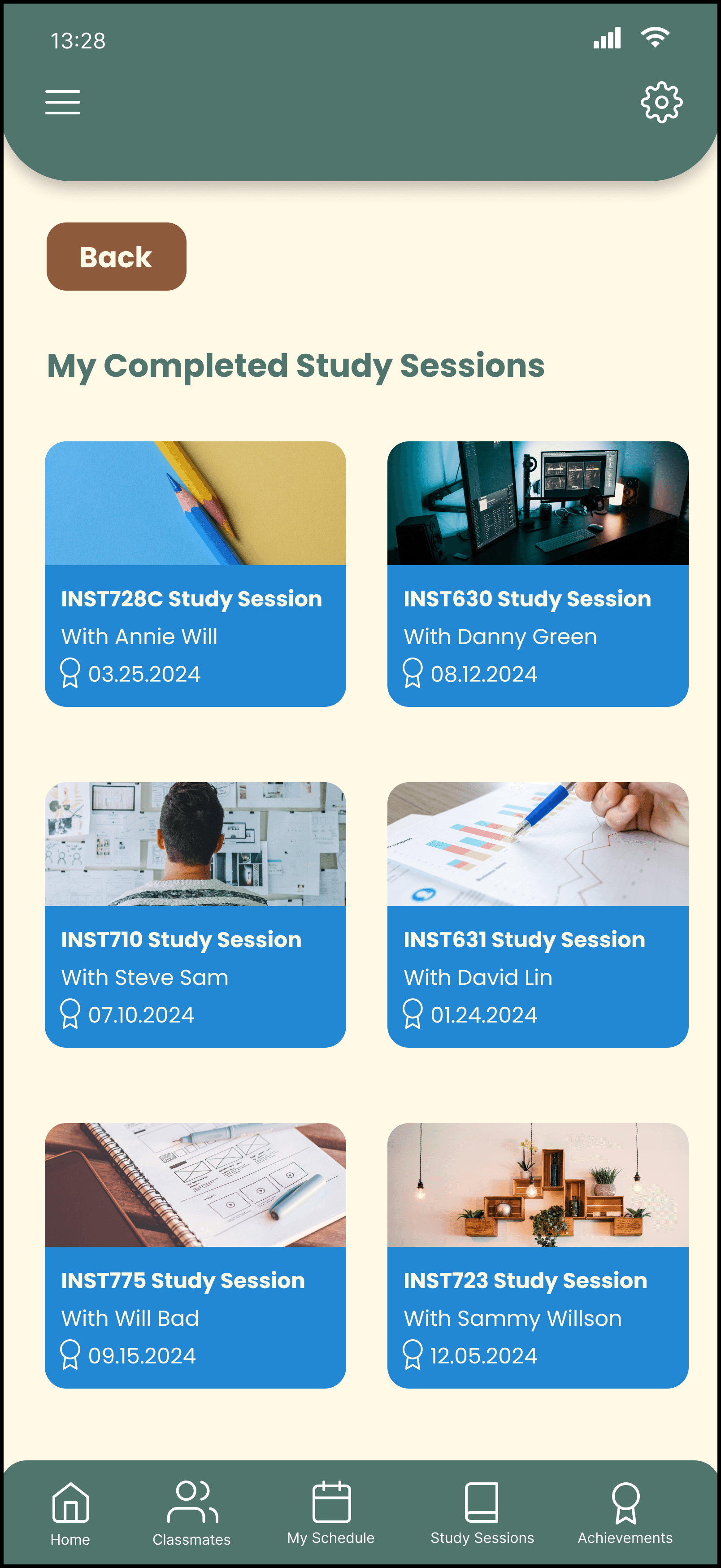
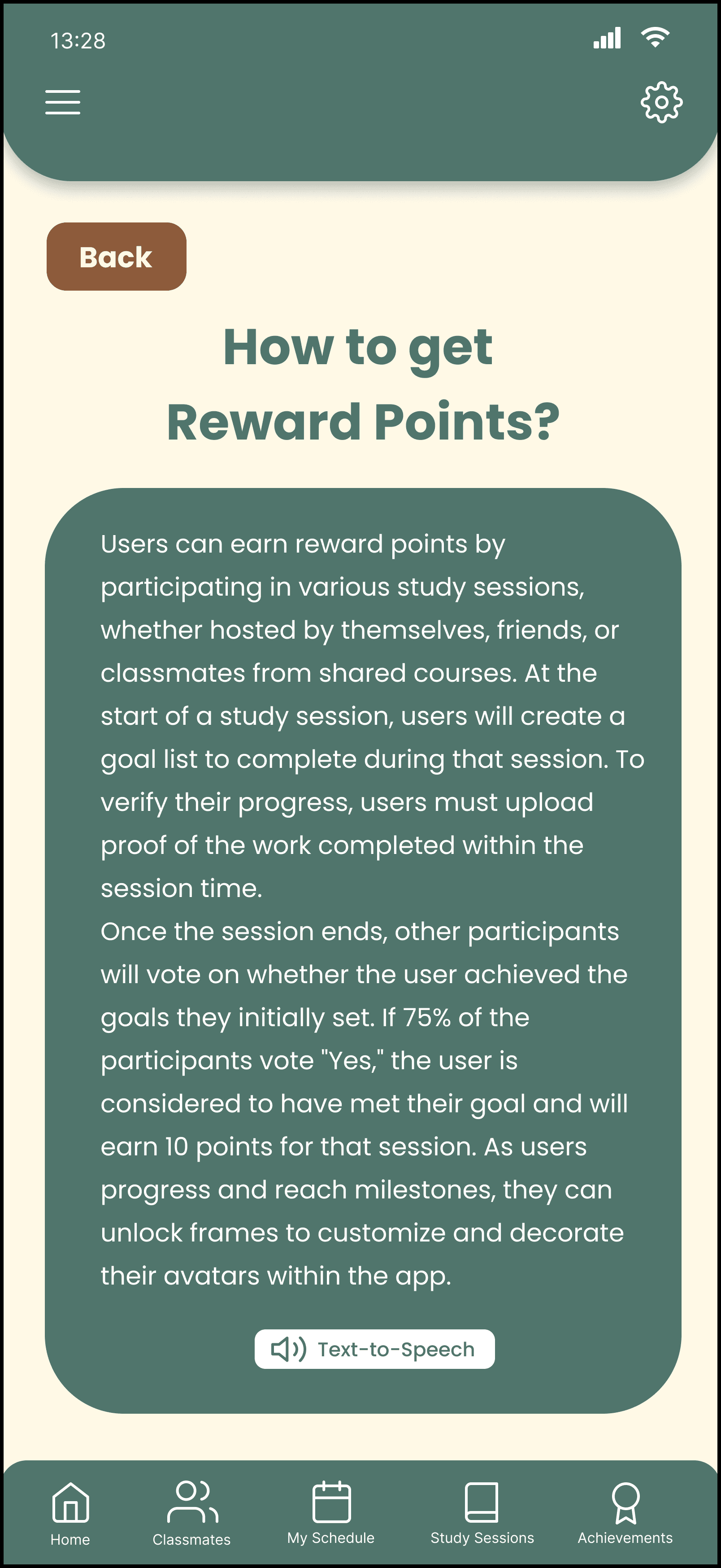
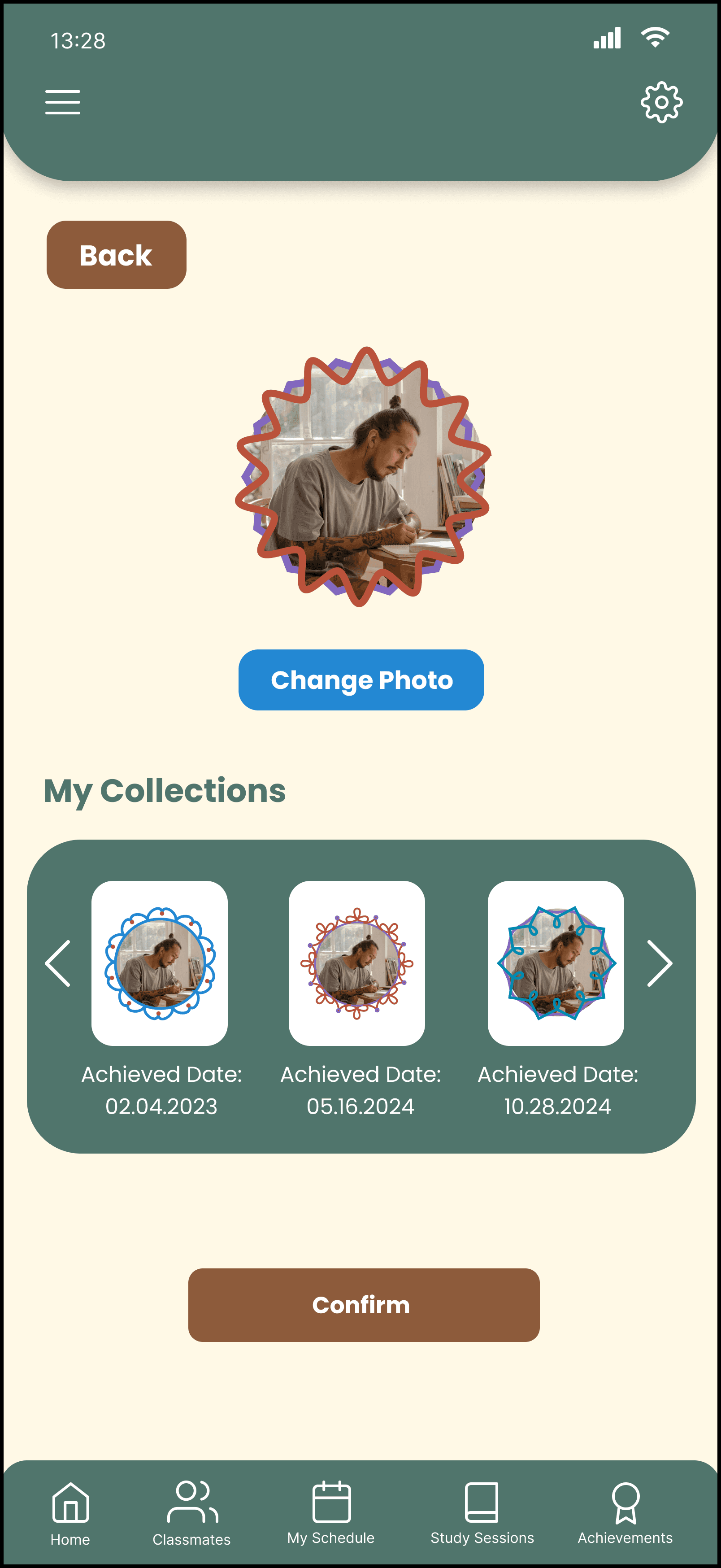
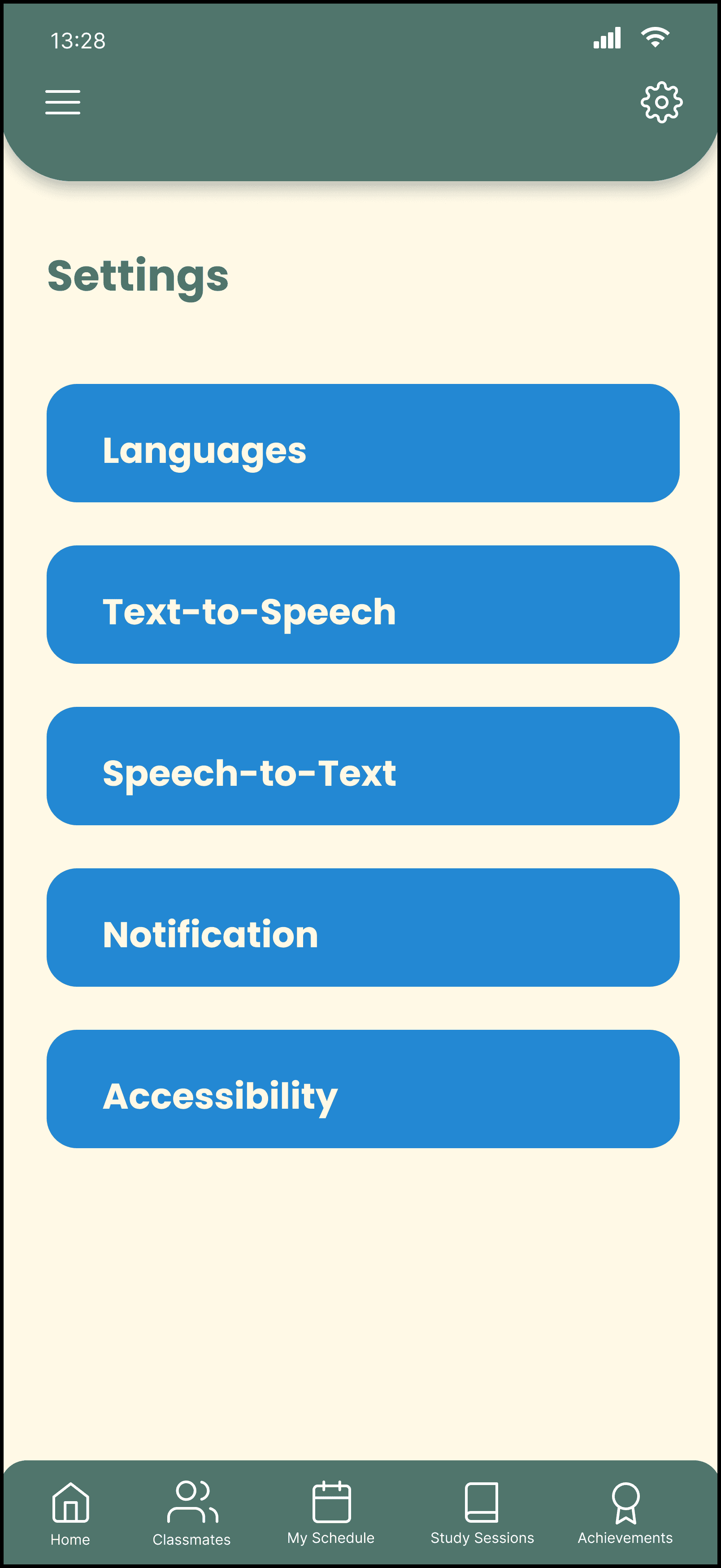
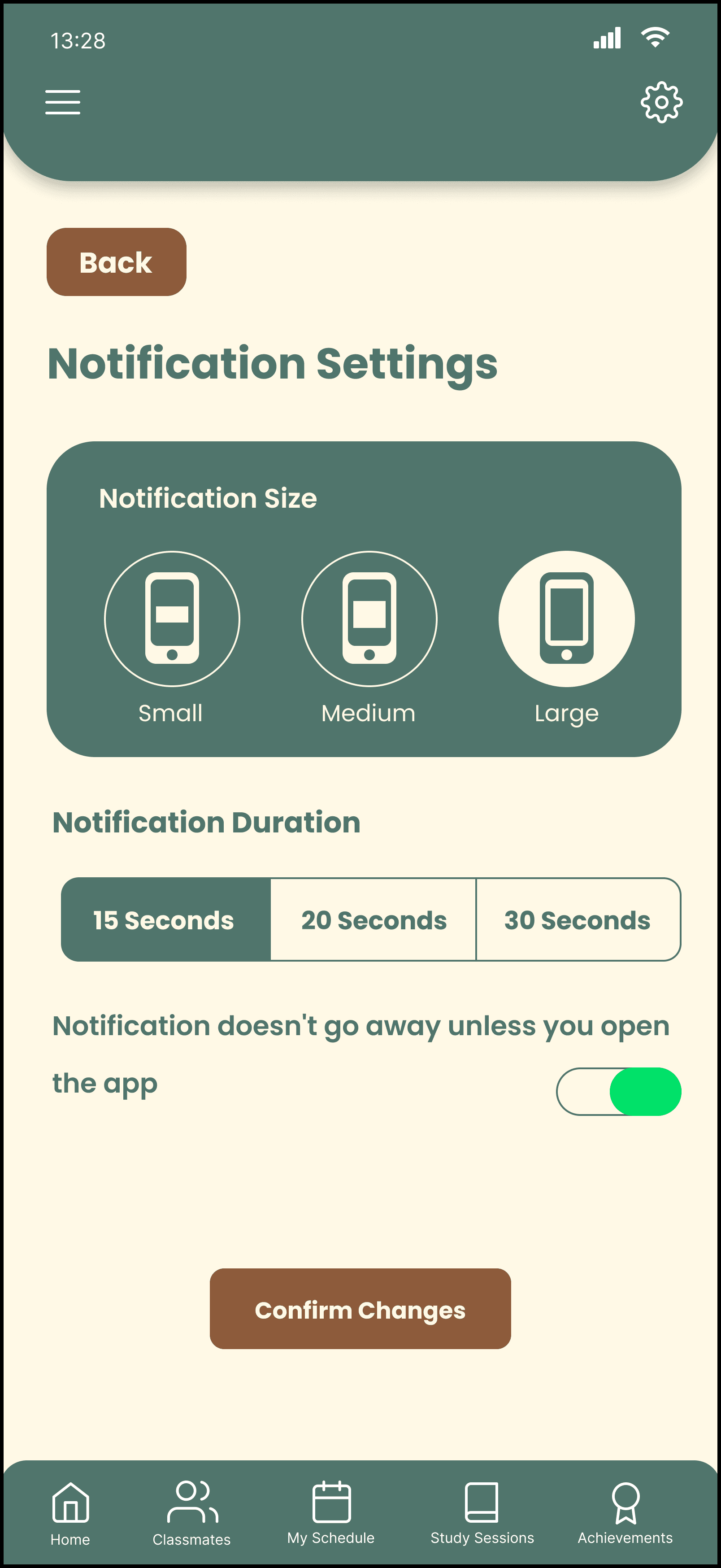
After making the changes to our wireframe, we moved into the high-fi design, choosing a color palette, and making the overall visual direction of our app more cohesive.

Prototyping
After finishing the high-fi wireframes, we prototyped interactions between the pages, adding pop-up confirmation boxes to screens and smooth animations to transition users between screens.
Why TerpSesh?
TerpSesh empowers students at UMD with ADHD to immerse themselves in a productive work environment and utilize body-doubling more efficiently by providing a platform to easily find or create study sessions with their peers. Specifically designed for the university, students can easily find the sessions made for their courses, ensuring study partners can rely on each other for encouragement and clarification.
Impact
By seamlessly tying together the study sessions to specific courses, students can be more comfortable joining sessions as they know it will be with their peers. Students can find, join, or create study sessions in one app, minimizing distractions. Students can add items to their checklist for the session. The app will lock their phone while they are in an active study session, minimizing distractions but allowing the user to override it for emergencies, or ending the study session early. Users will be able to reflect on the productivity of the session by showing each other their completed work at the end, and affirming if the others were able to complete the tasks in their checklist.